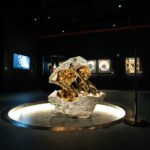
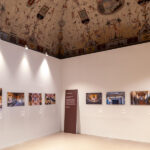
Christian Houge’s solo exhibition Paradise Lost is on display until 15 September at the Bomuldsfabriken Kunsthall in Arendal, Norway. Spanning 25 years of his photographic exploration, the show traces 25 years of his photographic exploration, tracing his evolution as an artist deeply engaged with the complex relationship between humanity and nature. Through his evocative and powerful photographic series, Christian Houge invites viewers to reflect on our place within the natural world and our impact on it.
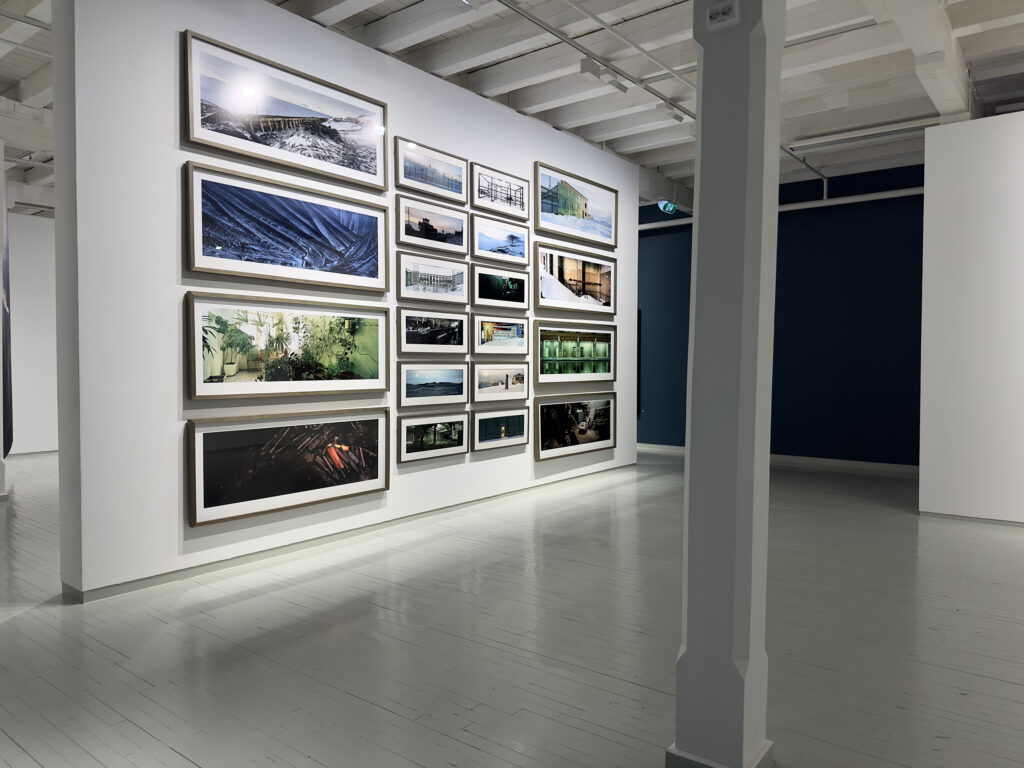
The exhibition’s title draws inspiration from John Milton’s 1667 epic poem of the same name, which grapples with themes of free will, morality, and the human capacity for both salvation and destruction. Christian Houge echoes these concerns, questioning humanity’s choices and urging a call to awareness and responsibility. In a world increasingly shaped by climate disasters, resource depletion, and political instability, his photographs serve as meditative spaces of pause and reflection. Paradise Lost is a search for balance, a confrontation with our fears, and an invitation to envision alternative paths.
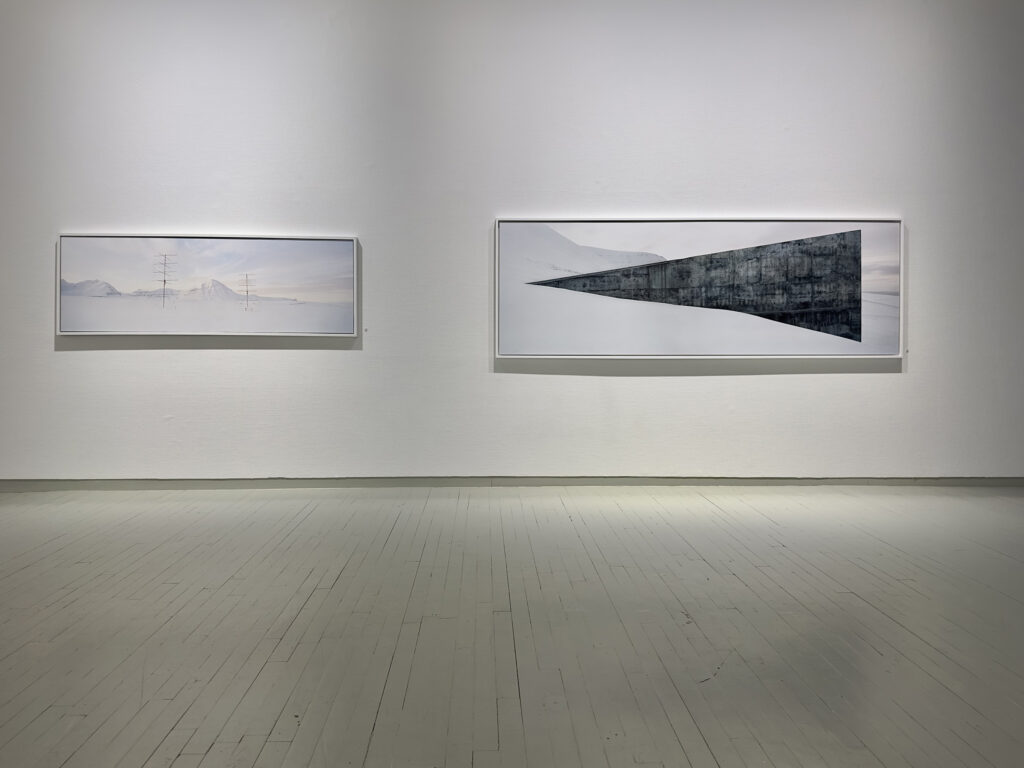
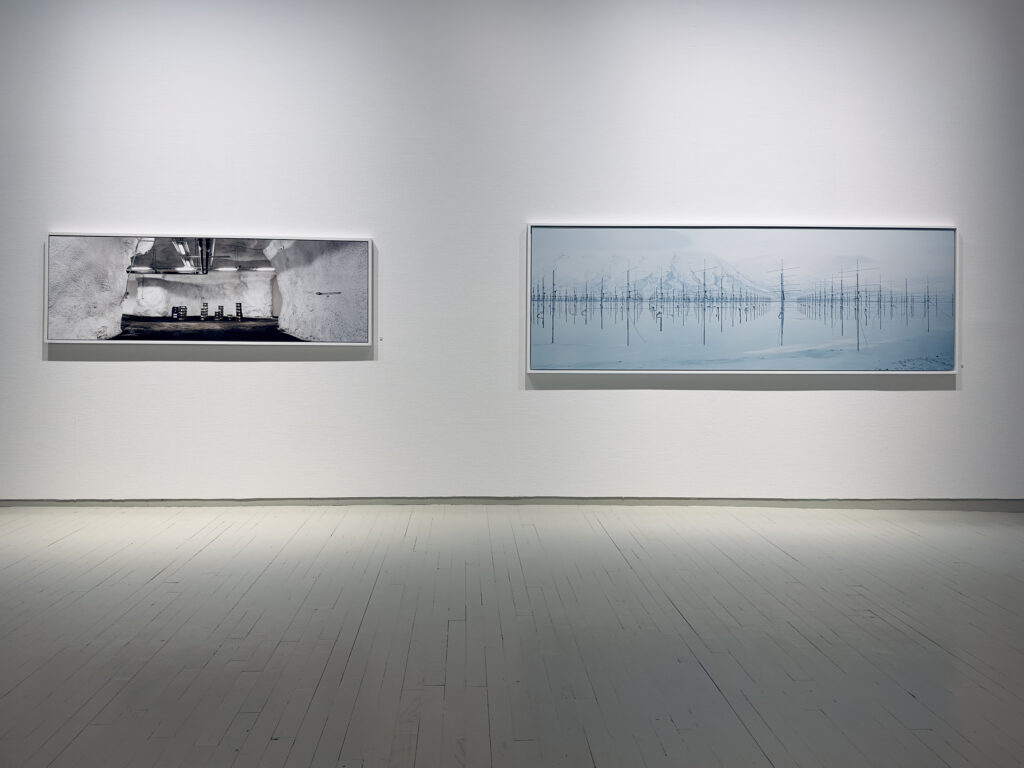
Christian Houge presents here a large selection of photographs belonging to different series. Arctic Technology was shot on Spitsbergen, Svalbard’s largest island, known for its surreal light and pristine atmosphere — an ideal site for climate and space research. Through panoramic images of antennas, satellite stations, and the Global Seed Vault, Christian Houge explores the contrast between the primal Arctic landscape and technology, highlighting humanity’s dual quest for control and understanding.
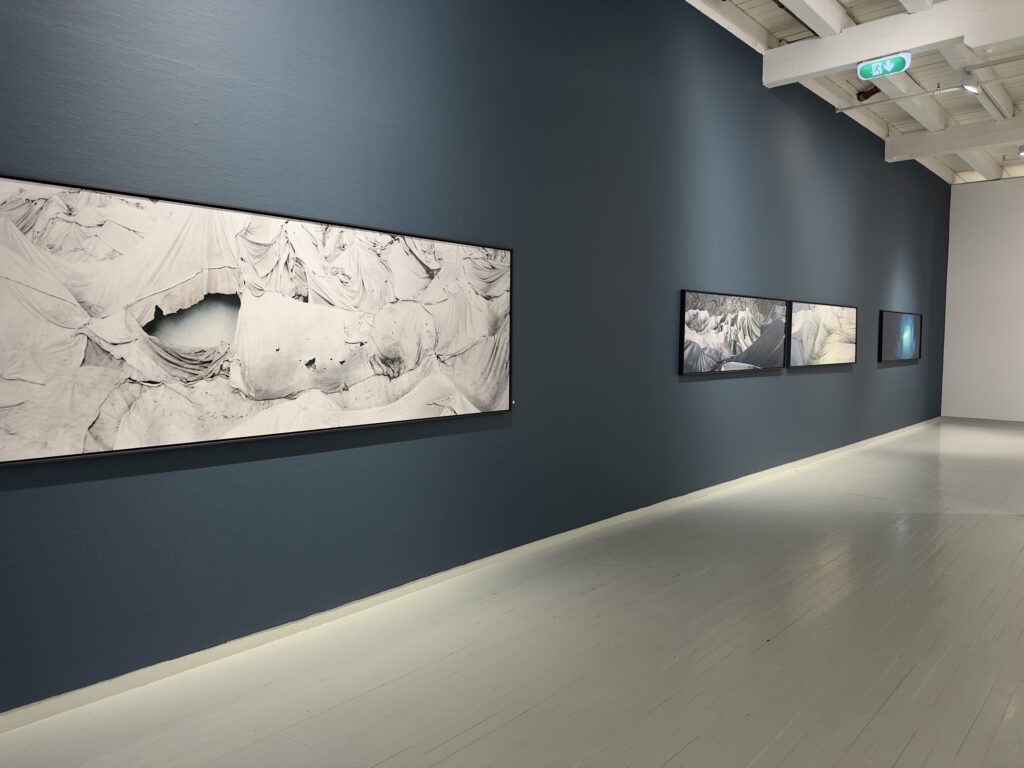
The glacial landscape once more becomes the setting for another series: Death of a Mountain (2016–2021). Here, the photographer documents the Rhone glacier in Switzerland wrapped in UV-reflective fabric in an attempt to slow its melting. Shot in panoramic format, the series evokes both tenderness and mourning, portraying nature as a dying giant.
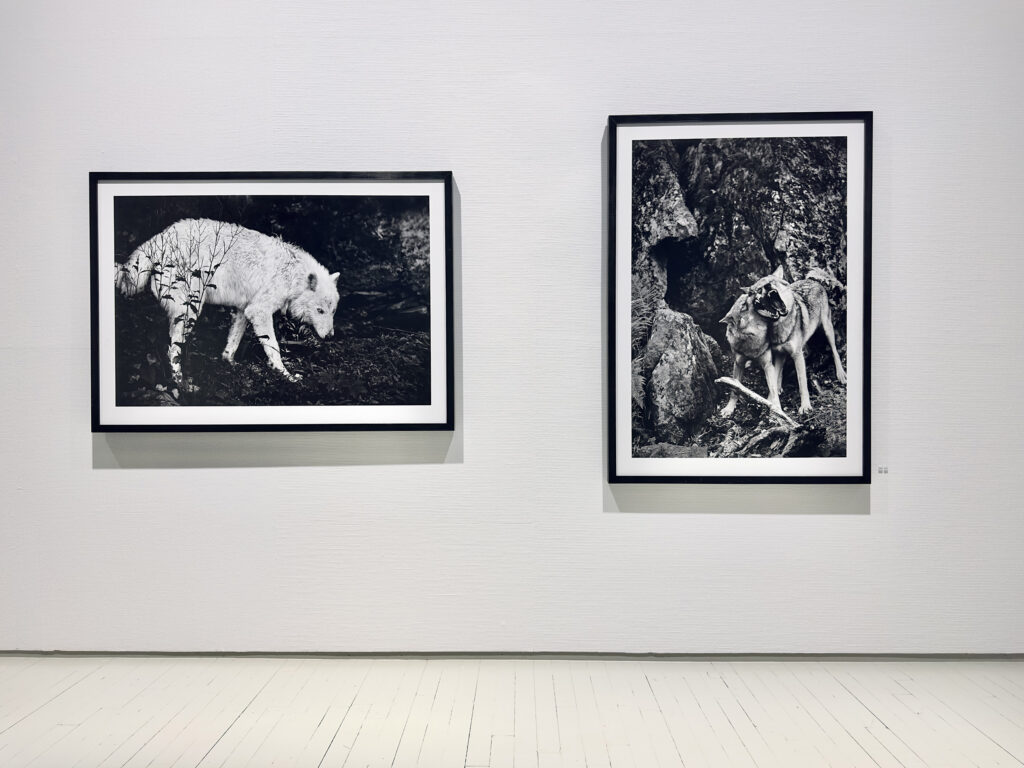
In his series Shadow Within (2010–2013), Christian Houge photographs wolves in Norway and the United States to explore humanity’s primal fears and inner duality – the tension between our civilized identity and our primal instincts. He uses the wolf, a creature both feared and revered, as a mirror to reflect human traits such as aggression, vulnerability, fear and social hierarchy. This thought-provoking series challenges cultural myths and invites viewers to confront their own shadows and the complex bond between nature and self.
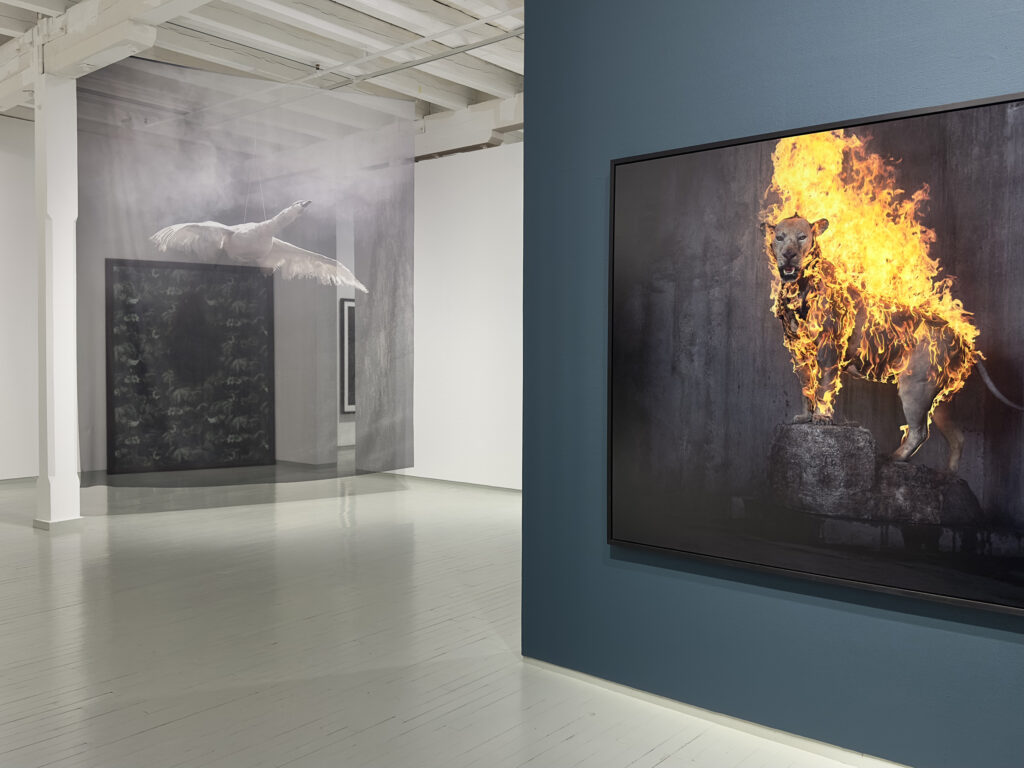
Residence of Impermanence (2017–2020) presents both appealing and terrible images of burning taxidermy animals against imperial English wallpaper, confronting themes of ownership, beauty, and destruction. Blending spiritual, historical, and cultural reflections, the series urges viewers to reconsider their relationship with animals and the silent extinction unfolding around us.
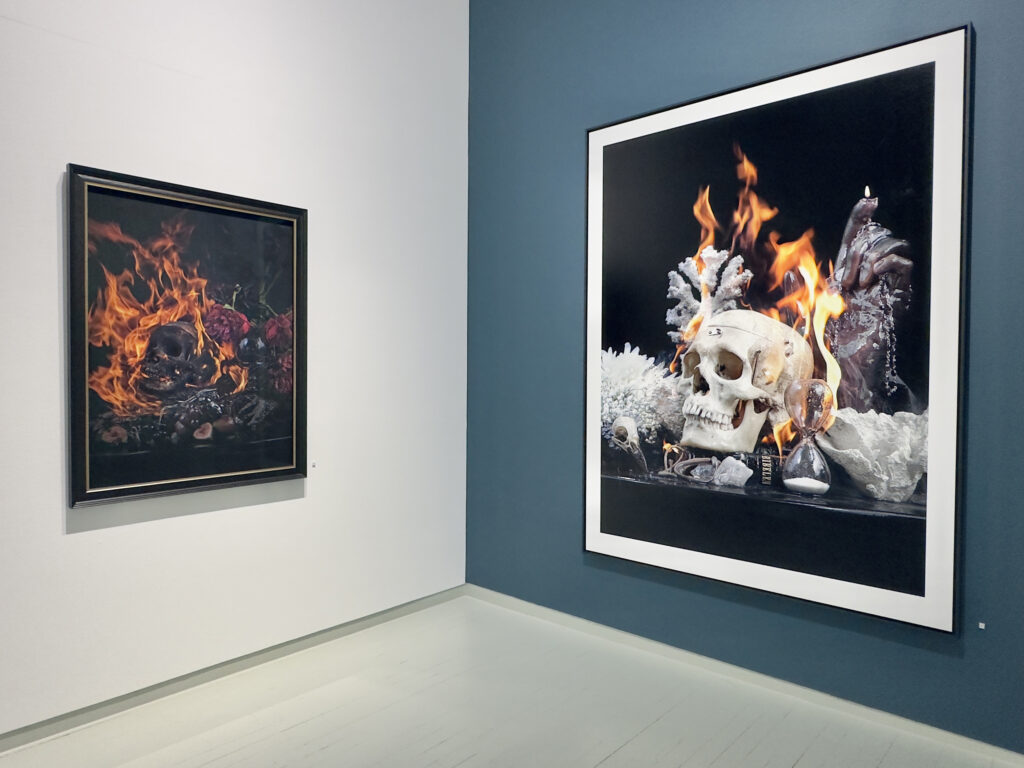
Christian Houge also uses ritualistic fire in the Vanitas (2019–2022) series. Here, the photographer reinterprets the 17th-century still-life tradition by merging classical symbols of mortality, such as skulls, with fire, a transformative force. His burning compositions evoke both destruction and rebirth, challenging vanity, ego, and the digital age’s obsession with beauty.
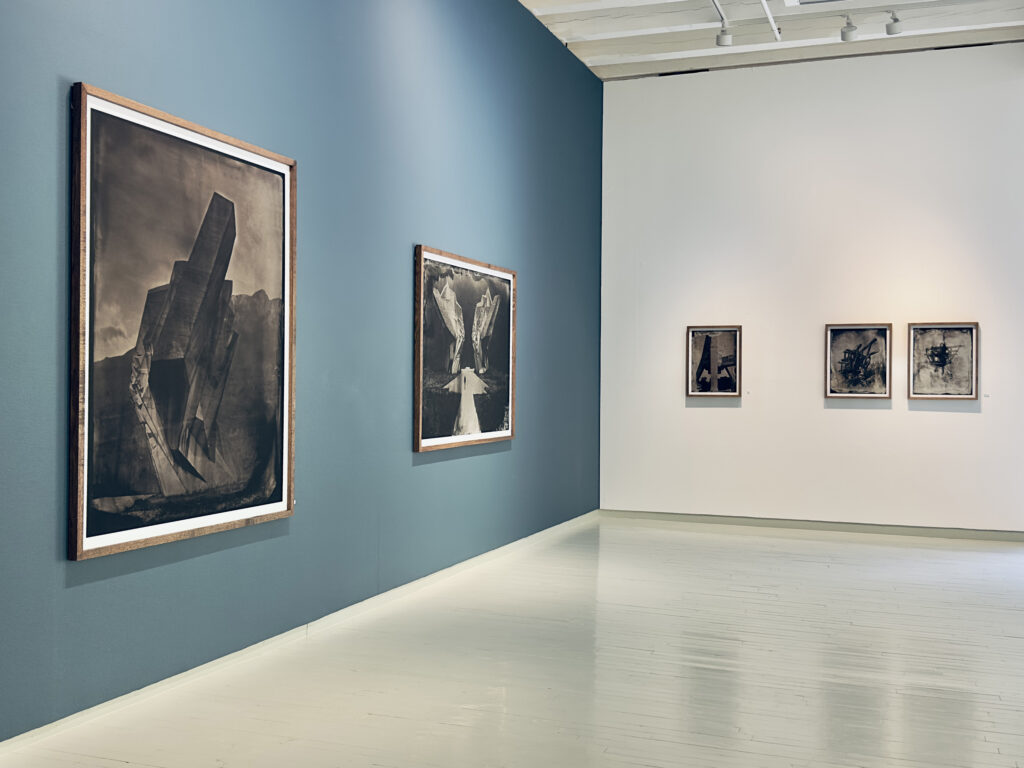
In Echoes of Utopia (2025), the photographer employs the very complex 19th-century wet collodion technique to photograph the Spomeniks, monuments erected in honor of the victims and heroes of the Second World War in former Yugoslavia. These Brutalist structures, once symbols of utopian ideals and now fallen into neglect, are transformed by Houge into visual elegies exploring themes of impermanence and memory. His images become meditative reflections on time, decay, and the tension between the past and the future in an age of digital speed and historical amnesia.
Despite the ominous tone suggested by Paradise Lost, Houge’s work is underpinned by a sense of hope: if we shift from consumption to care, from domination to understanding, from neglect to awareness, we can rediscover our place within nature rather than above it. In this way, Paradise Lost is not a lament of despair, but rather a call to consciousness and a reminder that, even in times of crisis, the seeds of a better future may still take root.