Nightfall

Empathy towards Things


Ephemeral Moments

Wandering Seasons
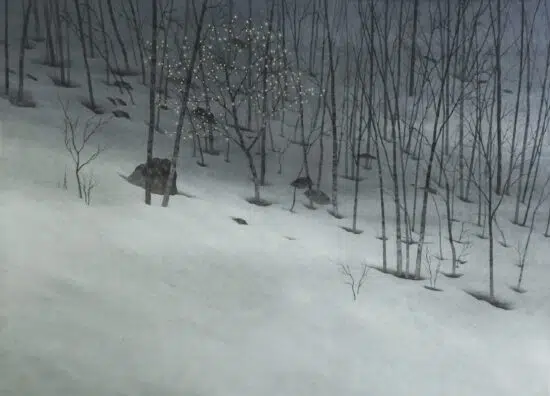
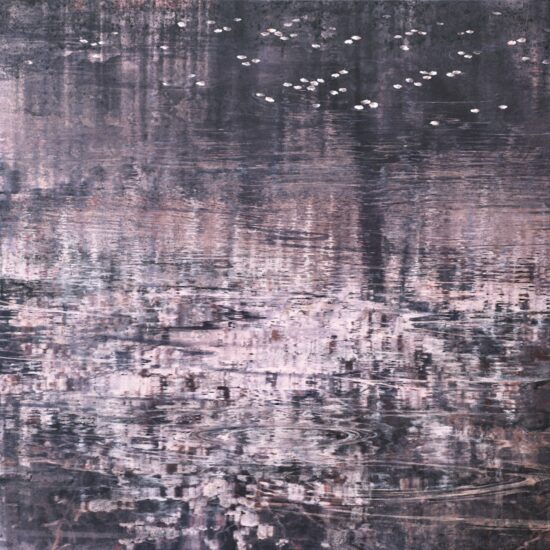
Tree portraits


Biography
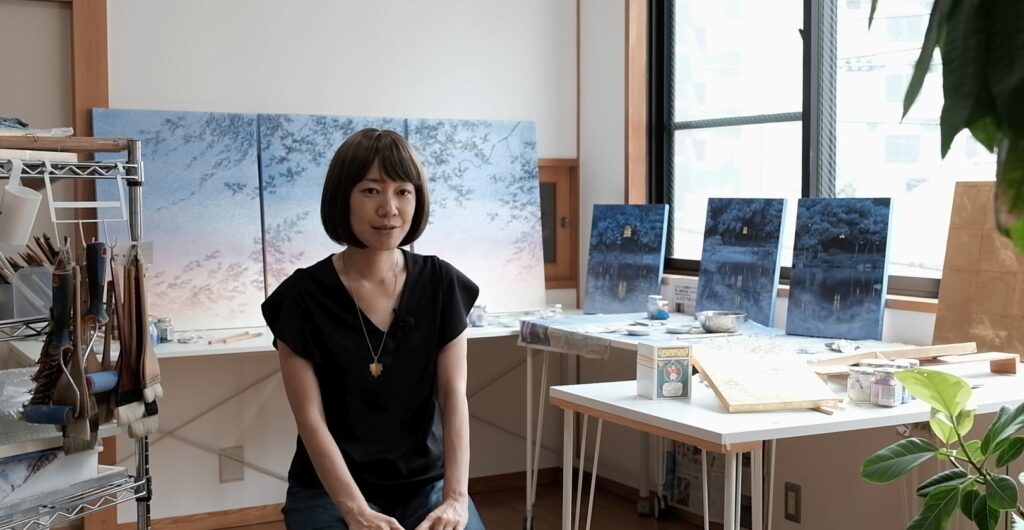
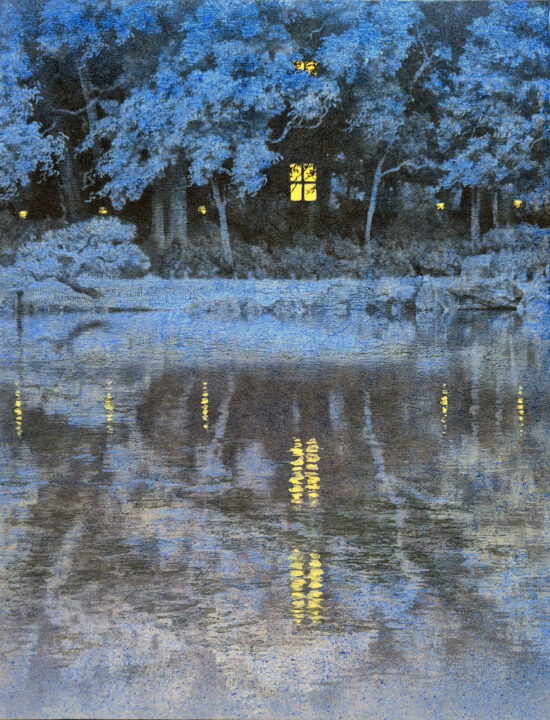
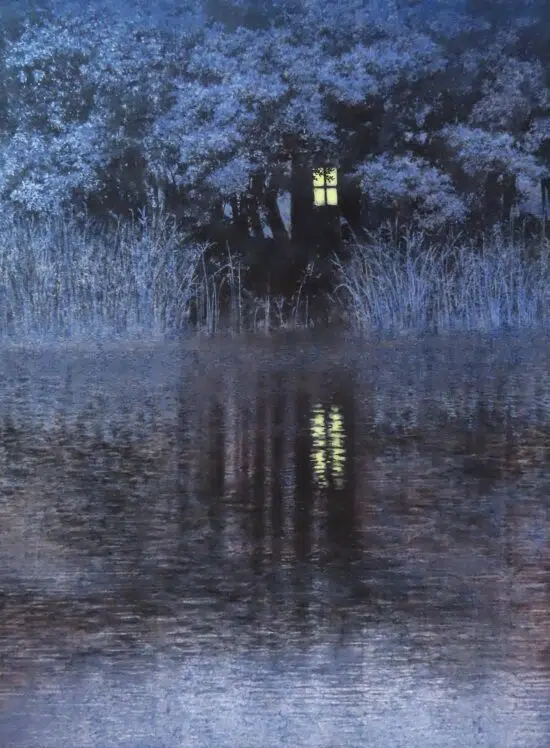
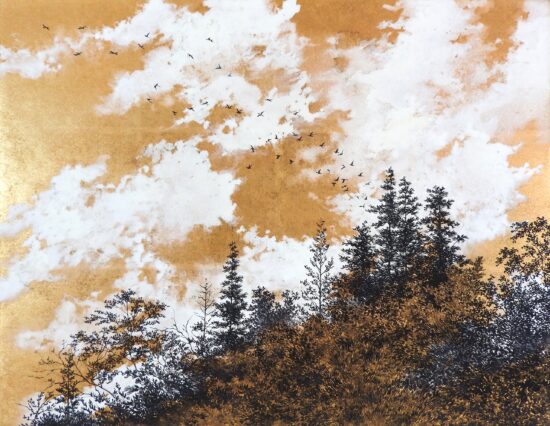
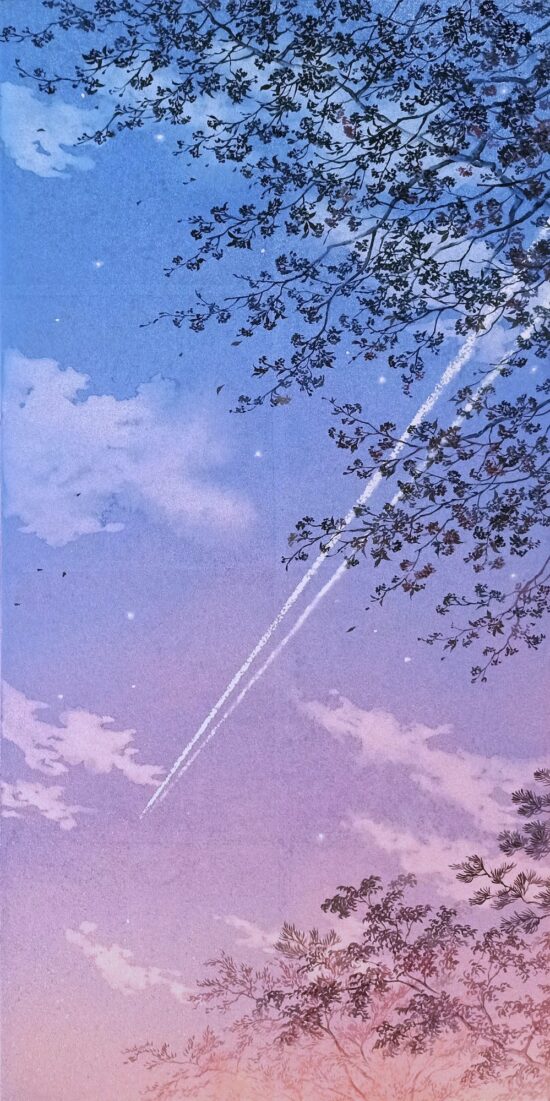
Japanese contemporary painter Shoko Okumura’s works explore the relationship between humans and nature, focusing on the spiritual dimension and ephemeral nature of the natural world’s constituent elements. The result is a body of work that is both delicate and profoundly poetic, where the richness of the details breathes life into the natural forms, and where finely applied gold and silver leaf illuminate the surface as they catch and reflect the light.
Shoko Okumura: the spiritual dimension of nature
At the heart of Shoko Okumura’s work lie the beliefs, spirituality and Japanese traditions bound to nature and its elements. Her work is inspired by the Shinto vision of nature as sacred, populated by invisible forces likened to deities. As a result, in her contemporary paintings, nature emerges as animated, alive, and in motion.
The artist points out that traditionally, Japanese shrines are built in unspoilt landscapes, often tucked away, deep in the heart of forests. This harmonious relationship between spirituality and the natural environment contrasts with the Western religious tradition, where most sacred buildings have sprung up in towns and cities. The sacredness of nature and its central role in the relationship between man and the world permeate all of Shoko Okumura’s work, and she is equally concerned about ecological issues and the conservation of natural environments.
“I am trying to explain why we always paint natural elements or landscapes. It is because Japanese painting was born to represent the invisible Shinto divinity present in the many elements of nature.” Shoko Okumura
The essence of things fixed in the present moment
Shoko Okumura’s work is also heavily influenced by ‘mono no aware’ (物の哀れ), an aesthetic and spiritual concept in Japanese culture that evokes the impermanence of things and an almost melancholy sensitivity to their ephemeral nature. The beauty of nature is not fixed: it is in perpetual transformation – the seasons pass, the colours fade, the harmonies of sound change… Through her painting, the artist seeks to perpetuate the present moment, to live it to the full, and to immortalise the nature she contemplates with admiration.
“The ‘melancholy of things’ does not prevent us from capturing their essence in the moment, which – because it is unique – becomes in its own way permanent. More than an aesthetic canon, ‘mono no aware’ is a way of being deeply rooted in the Japanese spirit, one that is experienced rather than simply observed. It also finds expression in painting, of which I have felt myself the messenger for many years.” – Shoko Okumura
A technique combining Japanese and Italian artistic heritage
Shoko Okumura was born in Japan in 1983 and grew up in Tokyo, nourished by a fascination with all things historical and ancient. After studying art history at the École des Beaux-Arts, then traditional painting at the University of the Arts, she left the modern metropolis and moved to Florence in Italy to study fresco restoration.
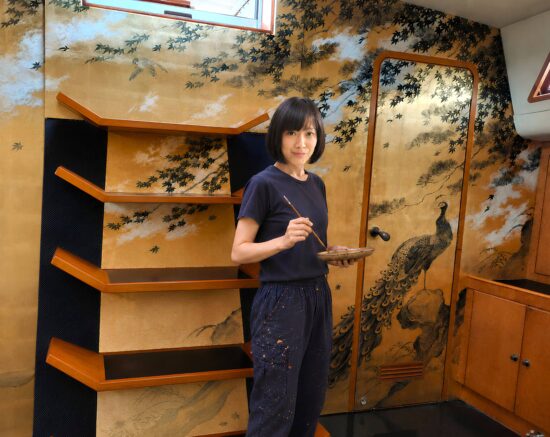
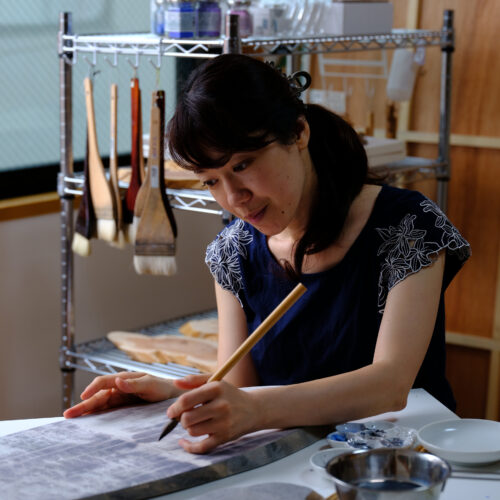
This immersion in Italian techniques enabled her to discover new materials that she combined with those of her own tradition. She then developed her own method: she frequently applies a base of gold or silver leaf to a Japanese paper support, then paints over it using traditional Japanese pigments combined with those used for frescoes. A subtle fusion of two very different and very rich artistic heritages.
During her fifteen years in Italy, she developed her career as a restorer, teacher of traditional Japanese painting and artist. Her work has been exhibited in galleries and art fairs in Japan and Europe since 2010. Her artistic body of work also extends into other fields, including fashion, publishing, and jewellery, through numerous collaborations. In 2023, her work was reproduced using the Nishijin weaving technique for the prestigious Bulgari Hotel in Tokyo. Today, Shoko Okumura lives and works between Tokyo and Milan.
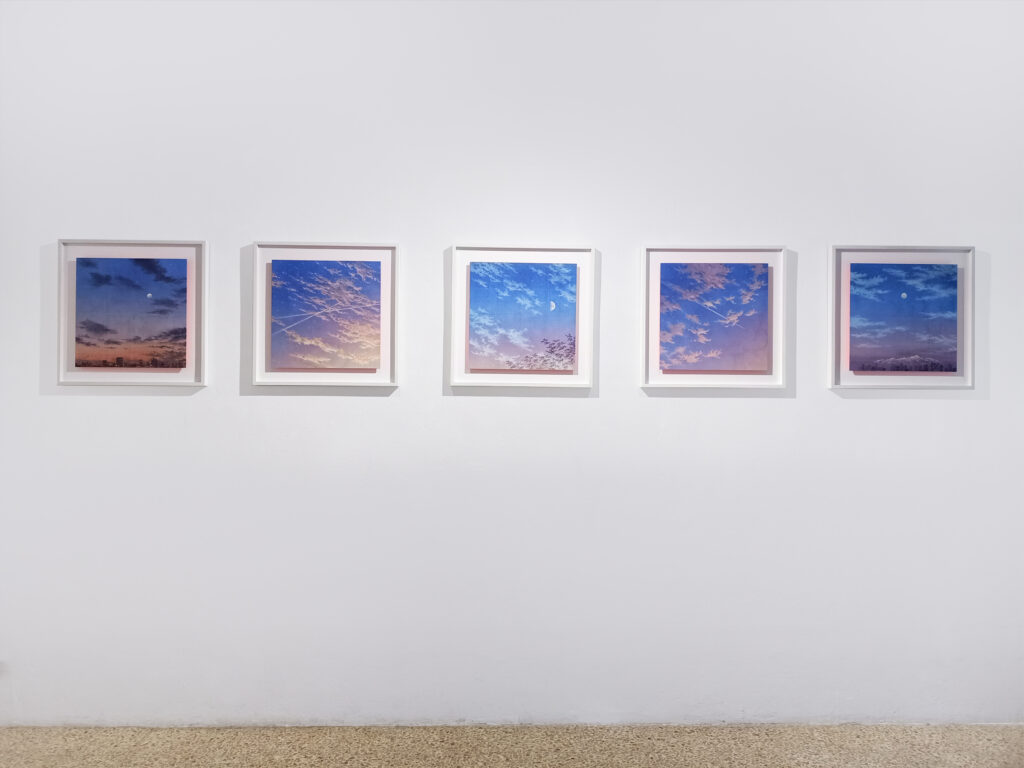
Shoko Okumura, exhibition view
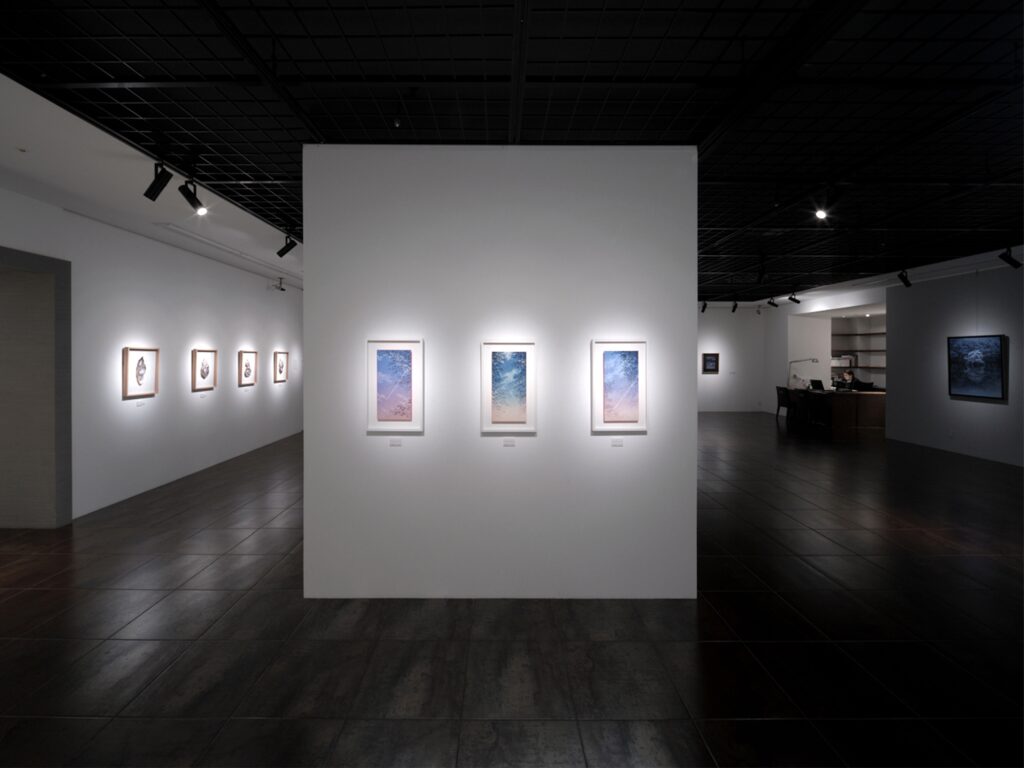
Shoko Okumura, exhibition view
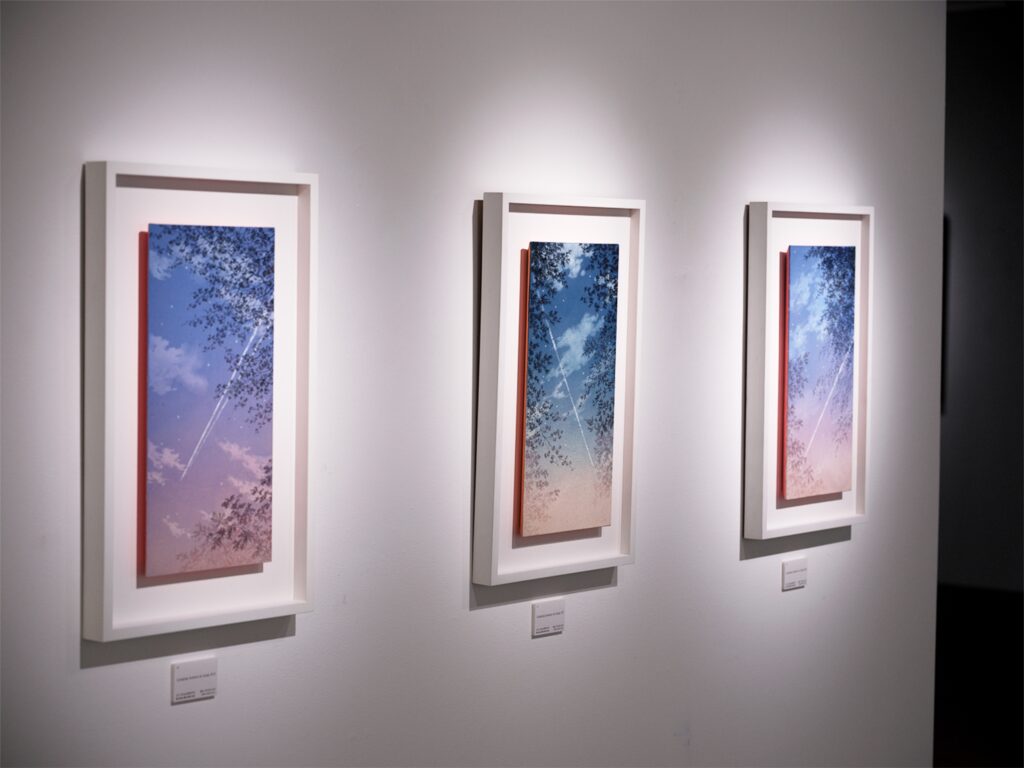
Shoko Okumura, exhibition view
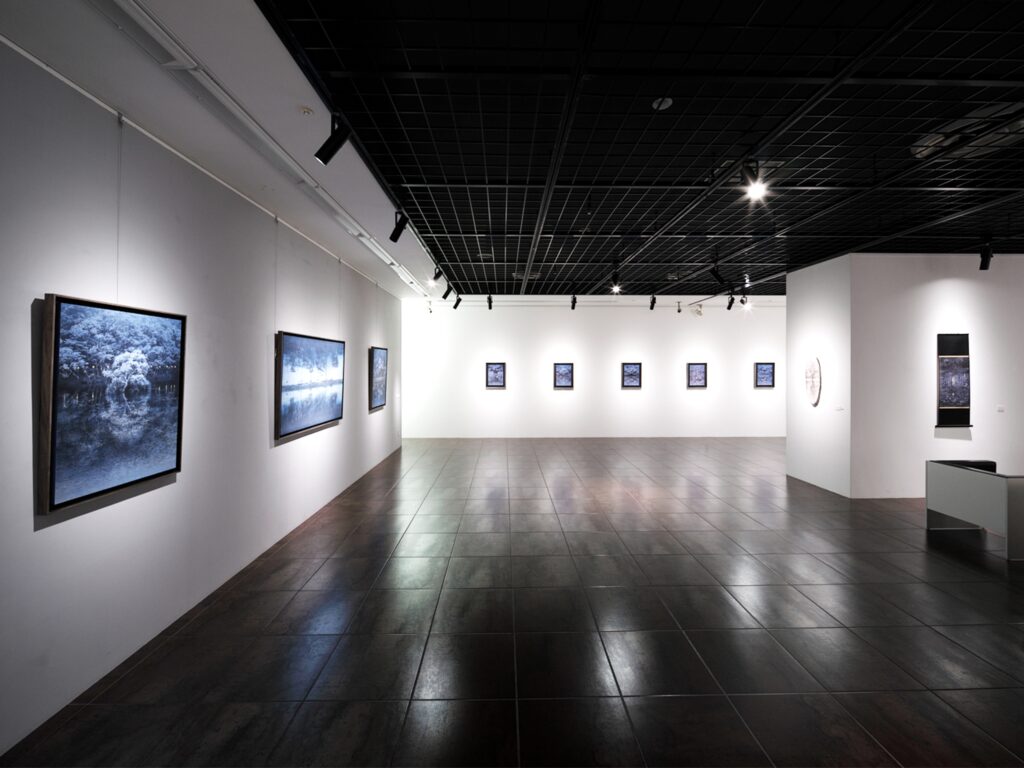
Shoko Okumura, exhibition view
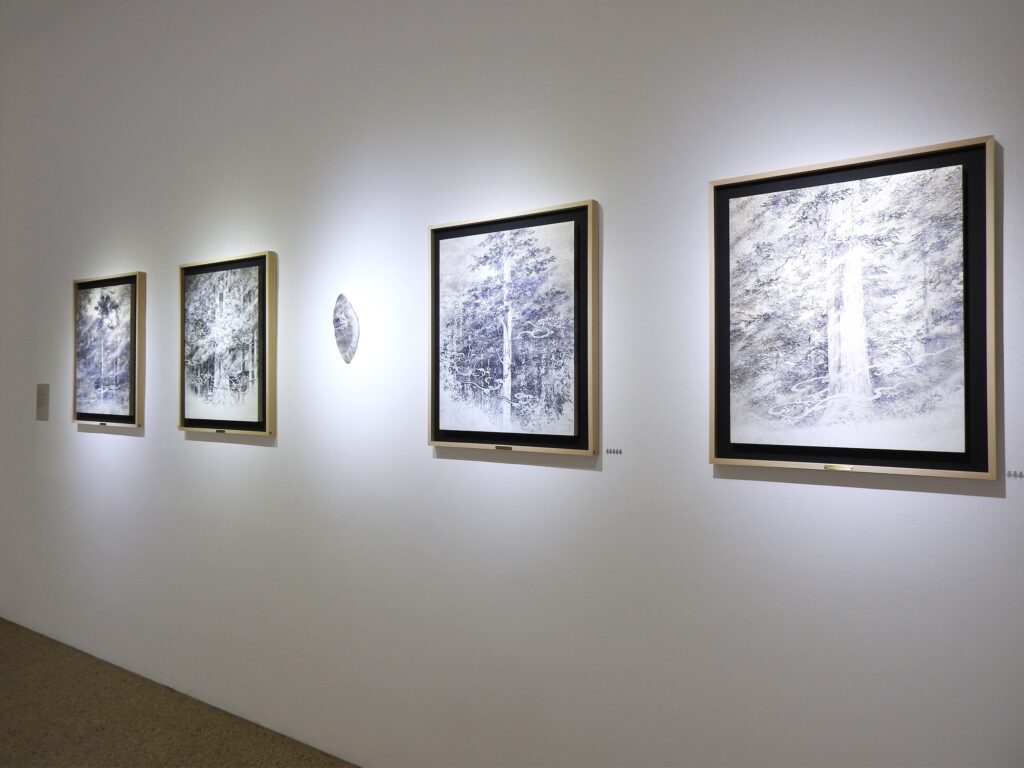
Shoko Okumura, exhibition view
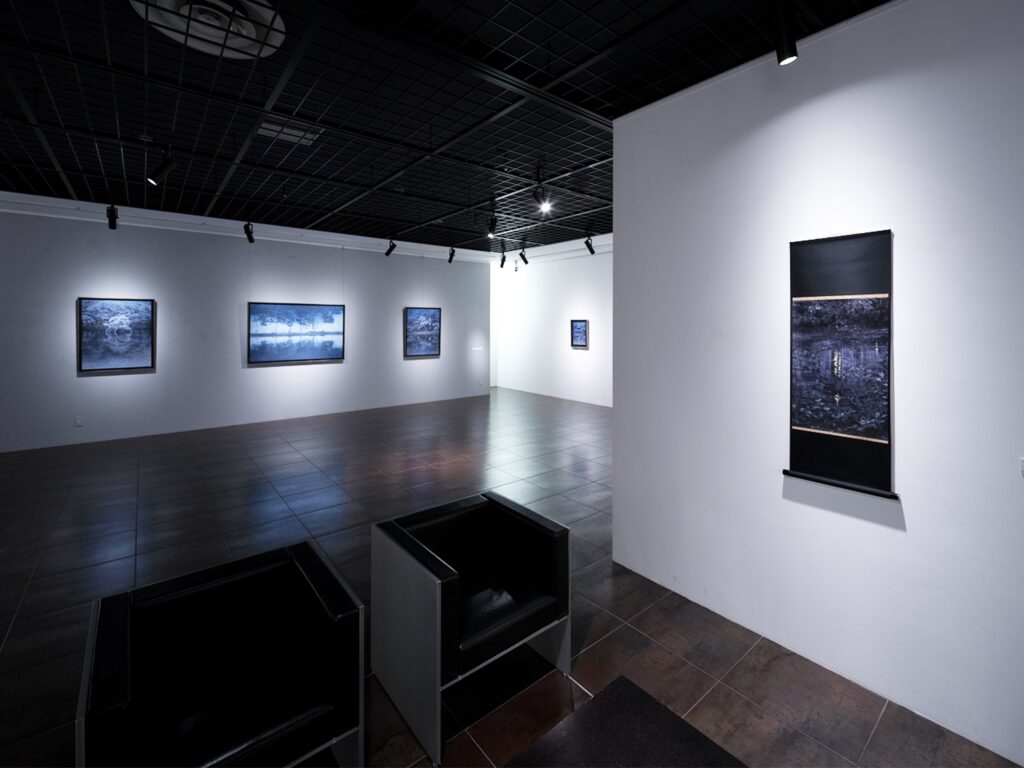
Shoko Okumura, exhibition view
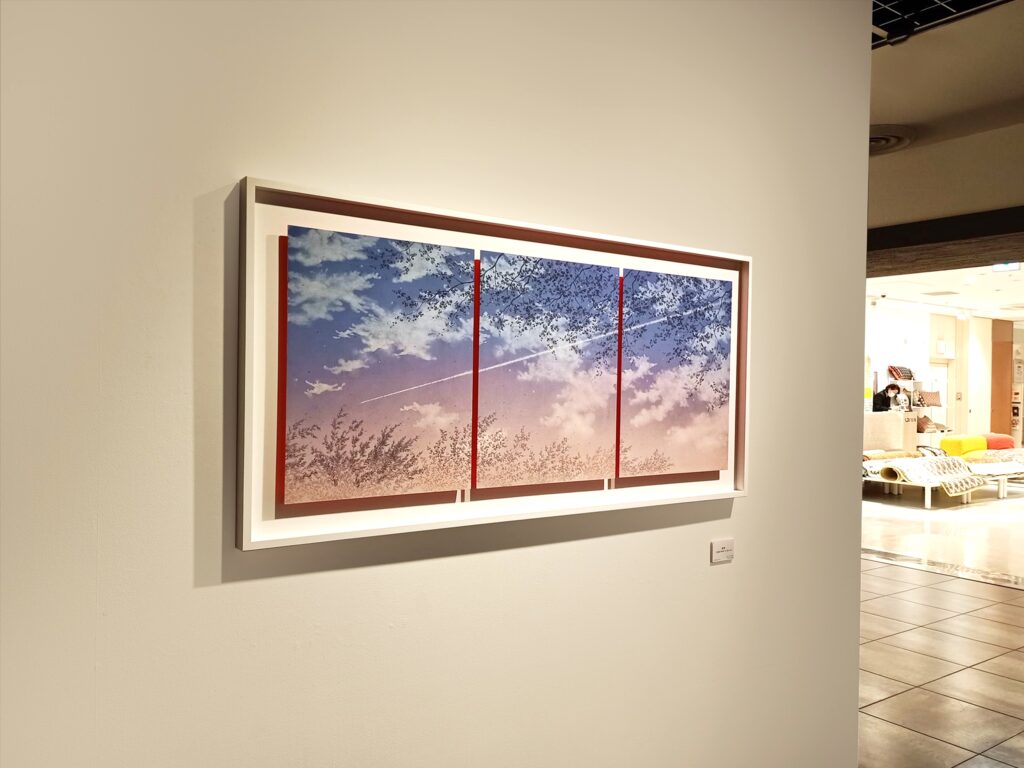
Shoko Okumura, exhibition view
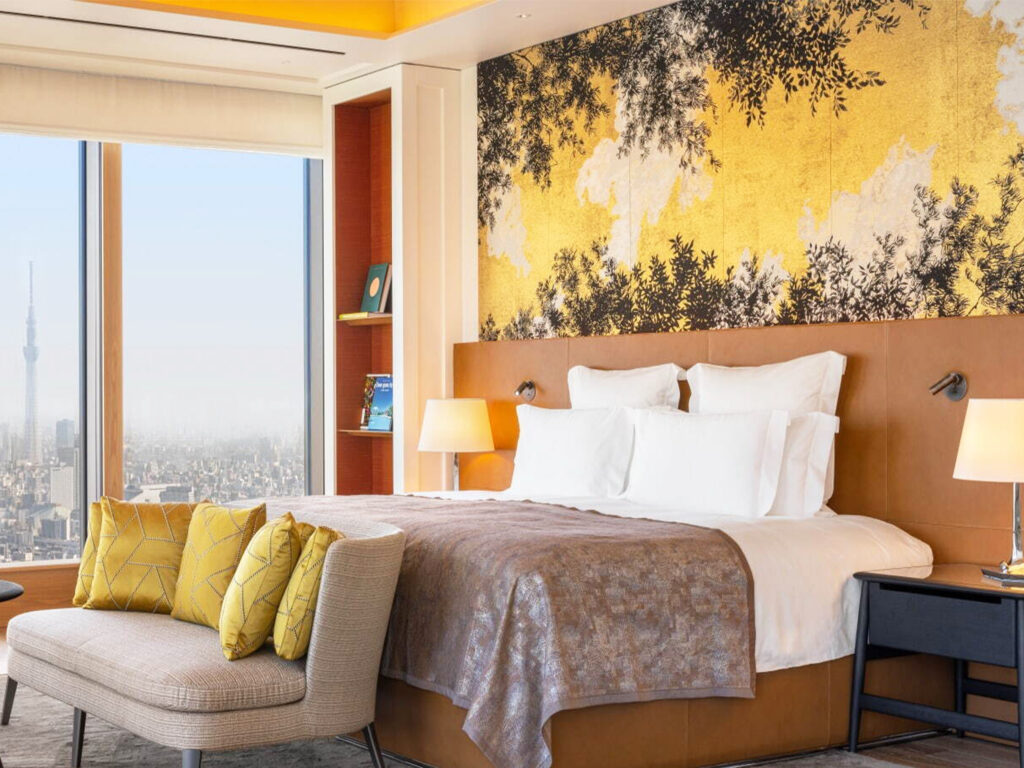
Shoko Okumura, Commission for the Bulgari Hotel in Tokyo, 2023
CV
Education
- 1999 – 2002 Joshibi of Arts and Design High School
- 2004 – 2008 Tokyo University of the Arts - Bachelor of Japanese paintings
- 2008 – Winner of the Japanese Horita Scholarship Foundation
- 2010 - Winner of Japanese Government Scholarship for Art studies
- 2008 – 2011 Master of Restoration of affreschi paintings – International University of Art Florence, Italy
Solo exhibitions
- 2025 – Solo show, Micro Art Complex KEIRO (Tokyo, Japan)
- 2024 – Nightfall in The Forest, solo show, Takashimaya Art Gallery (Tokyo, Japan)
- 2024 – Sacri legni, solo show, Te Palace (Mantova, Italy)
- 2024 – Solo show, Maison Toma, Milan Design Week (Milan, Italy)
- 2023 – Sacri legni, solo show, Manifiesto Blanco Gallery (Milan, Italy)
- 2023 – Solo show, Mitsukoshi Art Weeks (Tokyo, Japan)
- 2022 – Blossoms of Hope, solo show, Shinjuku Takashimaya Art Gallery (Tokyo, Japan)
- 2021 – Duo show, Affordable Art Fair (Hamburg, Germany)
- 2021 – Trasparenze fuggevoli della natura, duo show, Villa Zari (Brianza, Italy)
- 2020 – Finestre di Luce nei boschi, solo show, Manifiesto Blanco Gallery (Milan, Italy)
- 2020 – Universo Fluttuante, solo show, Vision Quest 4 Rosso Gallery (Genova, Italy)
- 2019 – Trasparenze crepuscolari, solo show, Centro di Cultura Giapponese (Milan, Italy)
- 2019 – Seifu-meigetsu, duo show, Takashimaya Shinjuku Art Gallery (Tokyo, Japan)
- 2018 – Natura sussurata, solo show, Corte degli Artisti Gallery (Milan, Italy)
- 2017 – Natura sussurrata, solo show, Frammenti d’Arte Gallery (Rome, Italy)
- 2017 – Natura sussurrata, solo show, Studio Arti Floreali (Rome, Italy)
- 2015 – Essenza della natura, solo show, Arte Giappone Gallery (Milan, Italy)
- 2013 – Kacho-Fugetsu, solo show, Spazio Porpora Gallery (Milan, Italy)
- 2012 – Arte nella natura, solo show, Asteria Center (Milan, Italy)
- 2010 – Solo show, Lucca Comics Festival, Romano Palace (Lucca, Italy)
Group exhibitions
- 2024 – Group show, Affordable Art Fair (London, UK)
- 2024 – Group show, Affordable Art Fair (Berlin, Germany)
- 2024 – Group show, Affordable Art Fair (Hong Kong, China)
- 2024 – Group show, Affordable Art Fair (Brussels, Belgium)
- 2023 – Group show, Mitsukoshi Nihonbashi Art Gallery (Tokyo, Japan)
- 2023 – Group show, Affordable Art Fair (London, UK)
- 2023 – Group show, Affordable Art Fair (Hong Kong, China)
- 2023 – Group show, Affordable Art Fair (Hamburg, Germany)
- 2023 – Group show, Affordable Art Fair (Stockholm, Sweden)
- 2022 – Homo Faber, group show (Venice, Italy)
- 2022 – Group show, (un)fair Art Fair, (Milan, Italy)
- 2022 – Group show, Affordable Art Fair (Hong Kong, China)
- 2022 – Group show, Affordable Art Fair (Hamburg, Germany)
- 2021 – Group show, Affordable Art Fair (Amsterdam, Netherlands)
- 2021 – Group show, Affordable Art Fair (Brussels, Belgium)
- 2020 – Bino-yokan, group show, Takashimaya Art Gallery (national tour, Japan)
- 2020 – Group show, Online Affordable Art Fair
- 2019 – Stati d’Arte, group show, Fidelia Palace (Spello, Italy)
- 2019 – Finalist exhibition Arteamcup 2019, group show, Nobel Palace (Sanremo, Italy)
- 2018 – Ko-kin, group show, Paraventi Giapponesi Nobili Gallery (Milan, Italy)
- 2018 – S’io m’intuassi, come tu t’immii, group show, MostraMi, Fabbrica del Vapore (Milan, Italy)
- 2018 – Arte giapponese, group show, Lante Palace (Rome, Italy)
- 2017 – Eterne stagione, group show, Monferrato Palace (Alessandria, Italy)
- 2017 – Arte Migrante, group show, La Torre Viscontea (Lecco, Italy)
- 2016 – Domani, group show, Tokyo National Museum (Tokyo, Japan)
- 2016 – Kimigayo, group show, MABIC (Maranello, Italy)
- 2016 – Arte giapponese, group show, Art Space SpazioD (Lecco, Italy)
- 2015 – Esopo, group show, Avantgarde Tattoo and Art Gallery (Sesto San Giovanni, Italy)
- 2014 – Poetessa Rengetsu, group show, Arte Giappone Gallery (Milan, Italy)
- 2012 – Beauty Japan, group show, Japan Matsuri Fair (Bellinzona, Switzerland)
Awards & Residencies
- 2019 – Winner, Focus Genova Award and Cabana Award, Contemporary Art Competition Arteam Cup 2019 (Italy)
- 2018 – Finalist, Contemporary Painting Competition S’io m’intuassi, come tu t’immii (Italy)
- 2015 – Winner, Adachi Contemporary Ukiyoe Award (Tokyo, Japan)
Commissions
- 2024 – Collaboration product Phantom Petals silk scarf with Maison TOMA (Milan, Italy)
- 2023 – Collaboration with HOSOO, Artwork for Hotel Bulgari (Tokyo, Japan)
- 2022 – Collaboration with Serapian, Jewelry box Sho-chiku-bai for Homo Faber (Venice, Italy)
- 2020, 2019 – Collaboration with Maison TOMA for Milan Fashion Week (Milan, Italy)
Publications
- 2025 – Book illustrations for La vita del poeta Basho e i suoi Haiku, written by Keiko Ando Mei, published by LiNDAU (Italy)
- 2020 – Book cover for Kado – Way of Flowers by Luca Maracciotti
- 2011 – Artworks for Vanity Fair Magazine (Italy)
Articles
Shoko Okumura: Bringing Empathy Towards Things to Sea
What if a painting never stayed in one place? For the fourth Artivism Awards, Japanese artist Shoko Okumura was invited to create a permanent mural...