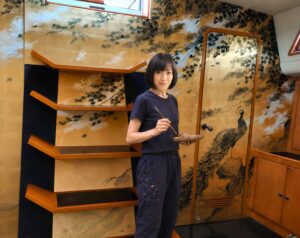
Italian artist Francesca Bernardini has been selected to represent Italy at the next edition of the Chaco International Sculpture Biennial, which will take place from 11 to 19 July 2026 in Resistencia, Argentina. We spoke with her about her project, Safe Place, and how she approaches this singular artistic experience.
Still relatively unknown to European audiences, the Chaco International Sculpture Biennial is nonetheless one of the most anticipated events in contemporary sculpture. Founded in the late 1980s in the city of Resistencia, in northern Argentina, it brings together every two years a select group of artists from around the world, invited to conceive and create a work in the open air, under the public eye. At the crossroads between artistic competition and popular festival, the event stands out for its unique format, turning artistic creation into a shared experience.
Over the years, the Biennial has established itself as a major international platform, attracting established artists from diverse artistic scenes. The works produced during each edition are then integrated into the public space of Resistencia, which has gradually become a true open-air “museum-city”, where sculpture is permanently embedded in the urban landscape and everyday life.
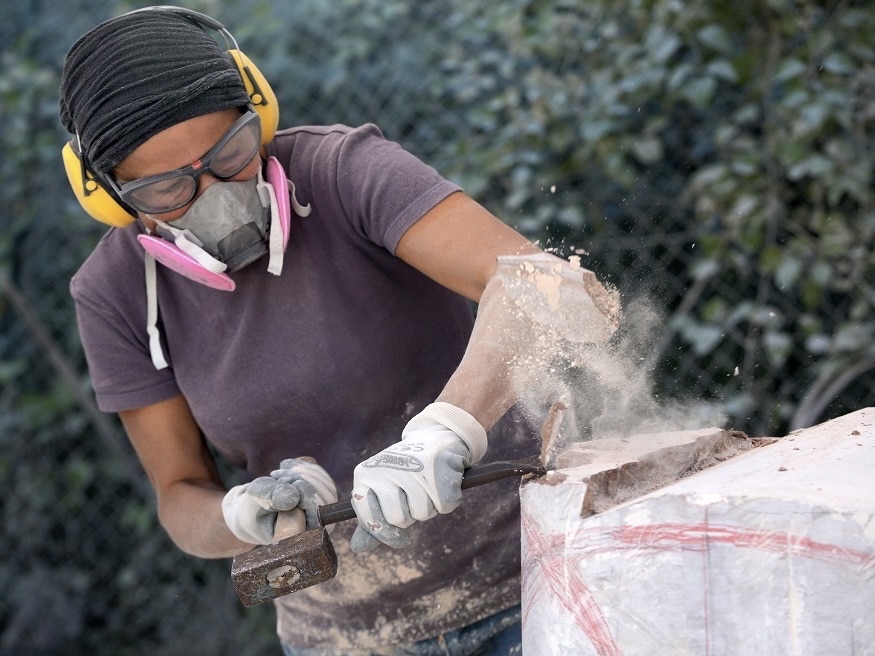
You have been selected to represent Italy at the 2026 Chaco International Sculpture Biennial. What does this selection mean for you at this stage in your artistic career?
I am very happy to have been selected. It is a truly unique experience, both a competition and a large-scale event. I have taken part in similar events before, but without a prize or winner, as is the case here. By applying, I knew I would be competing alongside talented and well-established artists. Being selected among them makes me both proud and excited. This selection also recognizes my commitment to bringing Italian artisanal craftsmanship into dialogue with contemporary languages. It shows that Italian sculpture is alive, dynamic, and capable of engaging with the tensions of our time.
The Biennial requires artists to create a work in just a few days, outdoors and in front of an audience. How do you approach this demanding and performative aspect?
I have already taken part in this kind of event, so I have the experience needed to manage the time constraint—especially since I can dedicate myself to it entirely. There is a certain pressure, of course, but it is a positive kind of stress that helps me stay focused and push aside fatigue, even when working ten hours a day. It is a pace I would not be able to sustain in my studio.
The presence of an audience is both stimulating and challenging. People often want to take photos with you or speak to you, even at moments when concentration is essential. Above all, I approach this different cultural context with openness and deep respect. I like to think of myself as a curious guest, eager to learn local codes—from gestures to language—in order to build an authentic bridge of communication. You quickly realise that different cultures are never so far apart, and that emotions and feelings are universal.
Can you tell us about the project you proposed for this edition—its main ideas and what guided your formal and conceptual choices?
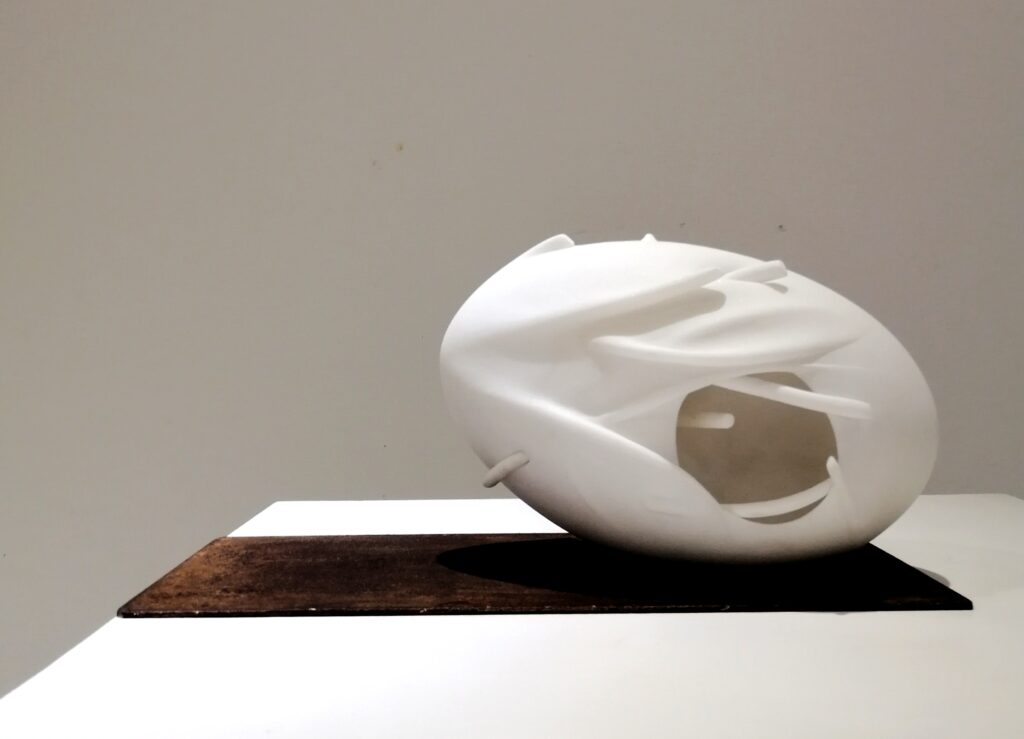
The sculpture I will create is entitled Safe Place. It takes the form of a nest, a theme I have explored in the past without ever exhausting it. The nest is the first horizon we encounter: an interweaving of threads, hands, thoughts, and care that becomes home, refuge, and promise. This sculpture celebrates that unique moment when life awakens and, still trembling, discovers that it has wings. It is an invitation to remember that every journey begins with being welcomed, and that it is only from a place of love that one can truly take flight. This reflection becomes even more meaningful if we consider the nest as a place—and that place as the world itself. A world that, now as in other times, is in danger, marked by shameful wars that disrupt global peace.
Do you already know the origin of the stone you will be working with—will it be a local material or an imported one?
I will be working with travertine, a stone that is very common in Latin America and similar to Roman travertine. It is a material with a strong character, which I particularly appreciate. It naturally led me toward a simple, refined form, with minimal detail.
Did the choice of a local stone influence your project? More broadly, did creating in Latin America shape your proposal?
I never let the material dictate my work, although some materials are better suited to certain forms than others. In this case, travertine supports the idea without determining it. Similarly, it is not so much the location that shaped my proposal, but rather the time we are living in. My work is more influenced by global contemporary concerns than by a specific geographical context.
At the end of the Biennial, your sculpture will become part of Resistencia’s public space. What is your perspective on this idea of a “museum-city” built from works created over the years?
A city filled with sculptures is more than just an “open-air museum”—it is a place where art is no longer distant, but becomes part of everyday life. I see urban sculpture as an invitation to slow down. In a world that is constantly accelerating, sculpture stands still; it invites us to pause, to observe details, to wonder what the artist intended—or simply to be captivated by beauty.
Chaco International Sculpture Biennial 2026
Resistencia, Chaco – Argentina
From 11 to 19 July 2026
bienaldelchaco.org