Through January 10, 2027, Francesca Bernardini is showing five works at mudaC – Museo delle arti Carrara in the group exhibition (Yours) in the Undoing. We took the occasion to talk with the sculptor, who is represented by Artistics, about marble, a material she has been working in Carrara for more than thirty years.
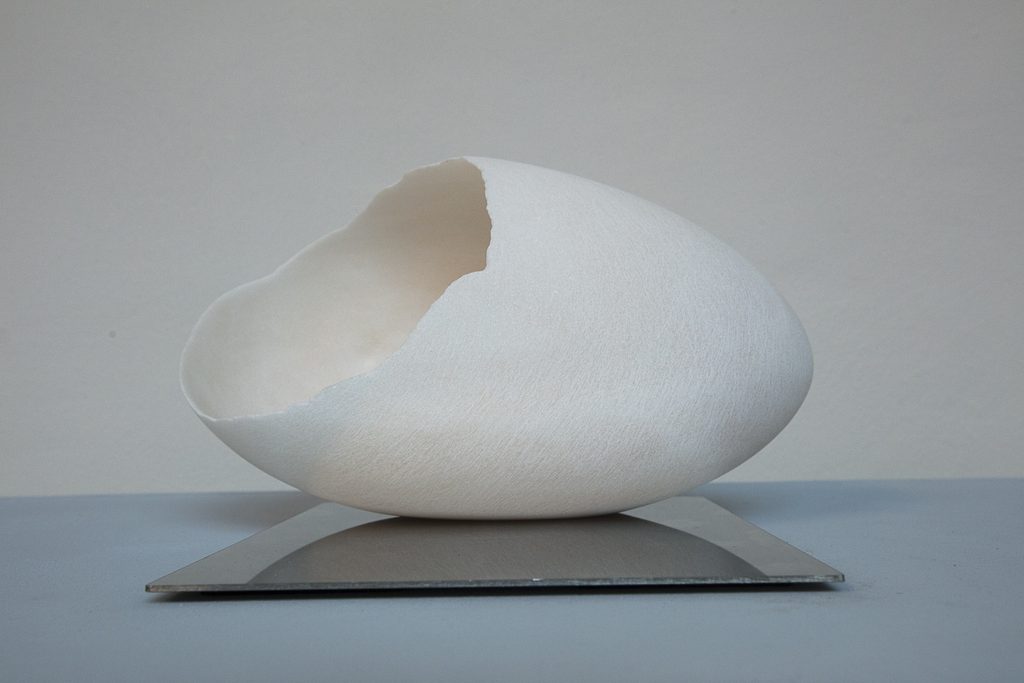
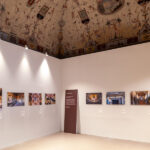
In Carrara, marble is everywhere: in the quarries cut into the Apuan Alps, in the workshops, in the city’s memory. Here, in the former convent of San Francesco that now houses mudaC, five women sculptors come together for (Yours) in the Undoing [Nel (tuo) disfare]. Conceived by a collective of young curators from NABA in Milan, the exhibition plays on the double meaning of “undoing”: ruin, but also a freeing gesture that lets new forms emerge. Bernardini’s works on view include Enwrapping and Over the Skin, which the curators describe as “protective forms on the verge of opening.”
Born in Carrara in 1974, Bernardini graduated from the city’s Academy of Fine Arts and trained in its historic workshops. She works in Torano, at the foot of the quarries. Since the early 2000s, her work has been shown on five continents, and she has created numerous monumental pieces for public spaces at sculpture symposia. She spoke with us about her relationship with marble, her influences, and what this stone allows her to express.
Choosing the Stone
For many people, marble means a white, almost flawless stone. Yet it comes in a great many varieties. What matters most to you when you choose a block?
Carrara marbles come in many shades, depending on the quarry they’re cut from, but they’re not all equal. Some, which we call “cooked” marble here, have a grain that crumbles like sugar. You can’t get a crisp edge out of them. I choose marble for its color, but above all for its consistency. I need sound stone with a fine, tight grain. That’s what lets me push the thickness to its limits and carve very fine detail without weakening the stone.
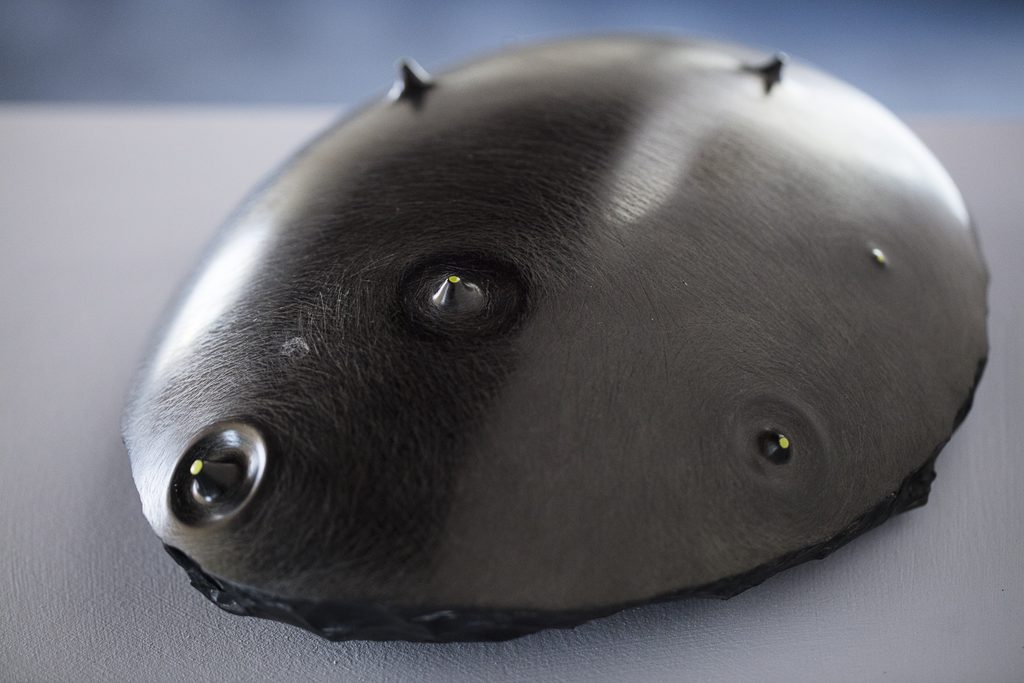
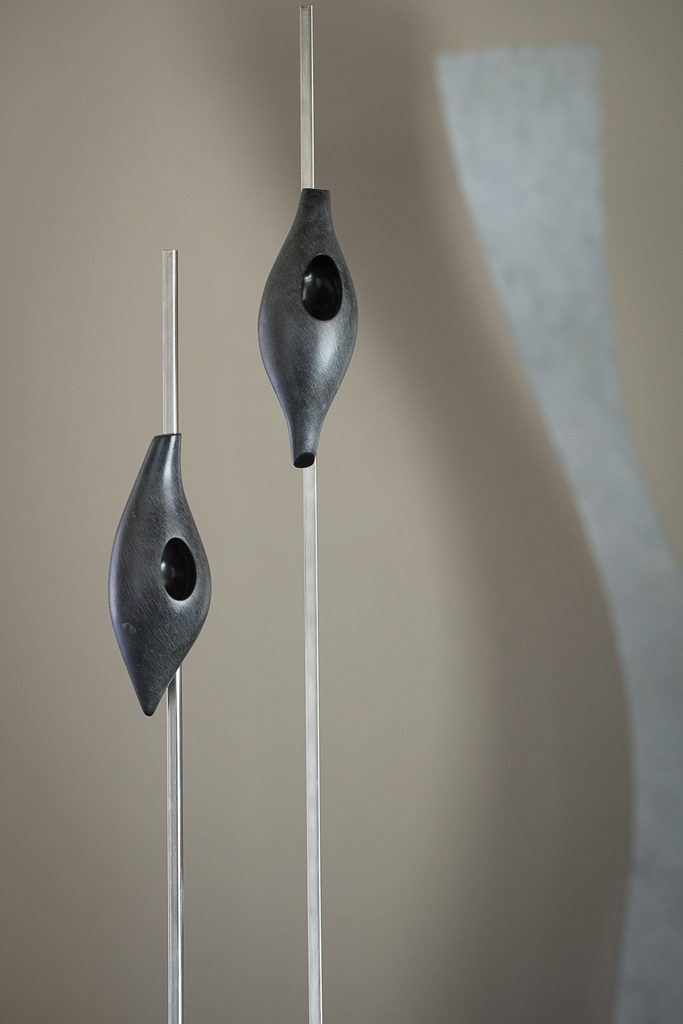
I also love Belgian Black, for the range of tones it takes on in the finishing, from soft gray to deep black. It pushes me to experiment with different surface treatments, as in Fragment and Nidi (Nests).
That’s the richness of marble. Depending on the finish, it can be smooth or rough, play with strong contrasts of light and dark, turn translucent and weightless, absorb light or reflect it. And its fine crystals allow a virtuosity of detail that no other material can match.
The Workshop as a School
You’ve spent more than thirty years in Carrara’s workshops. What did that training give you?
I came to the SGF studio in Torano in 1994 and never left. For a lot of people, marble is hard to approach. For me, it was love at first touch. From seasoned artisans, I learned the traditional techniques, but I also learned to read the stone: to tell sound marble from “cooked” marble, a harmless vein from a crack, and to sense which way the stone wants to be cut.
The studio also brought me into contact with artists from other countries, who always pushed and encouraged me. Those exchanges opened me up to other sensibilities and other ways of working.
Over time, I realized you don’t build your own language by chasing a recognizable style. It’s more about figuring out what truly belongs to you, what moves you, which themes you need to explore. That’s when your language becomes recognizable. For me, it’s still alive and always evolving, shaped by the people I meet and the experiences I have.
By Hand, Not by Machine
Marble-carving tools have changed a lot. How has that affected your practice?
Some tools have become lighter, easier to handle, and more powerful, but the basics haven’t changed: chisels, rasps, sandpaper. Today, CNC milling robots have cut production time in half, so practically anyone can turn out a marble sculpture. I don’t use robots. For large pieces, I sometimes use a diamond wire saw for the first rough cuts, which also lets me save blocks for other sculptures.
For everything else, and especially the finishing, I work with traditional methods. They’re the ones that best respect the nature of marble and bring out its qualities. There are chemical products now that imitate polishing by skipping essential steps. You end up with a plasticky surface that has nothing to do with a true polish, and it doesn’t last, because the crystal was never sealed through the successive stages of polishing.
Does the marble itself ever steer your choices?
I always choose sound stone. But if a flaw shows up while I’m carving, I sometimes have to rethink a volume or change a line. A detail carved into a weak spot could break during finishing. That doesn’t mean passively accepting the material’s limits. It’s a dialogue with it.
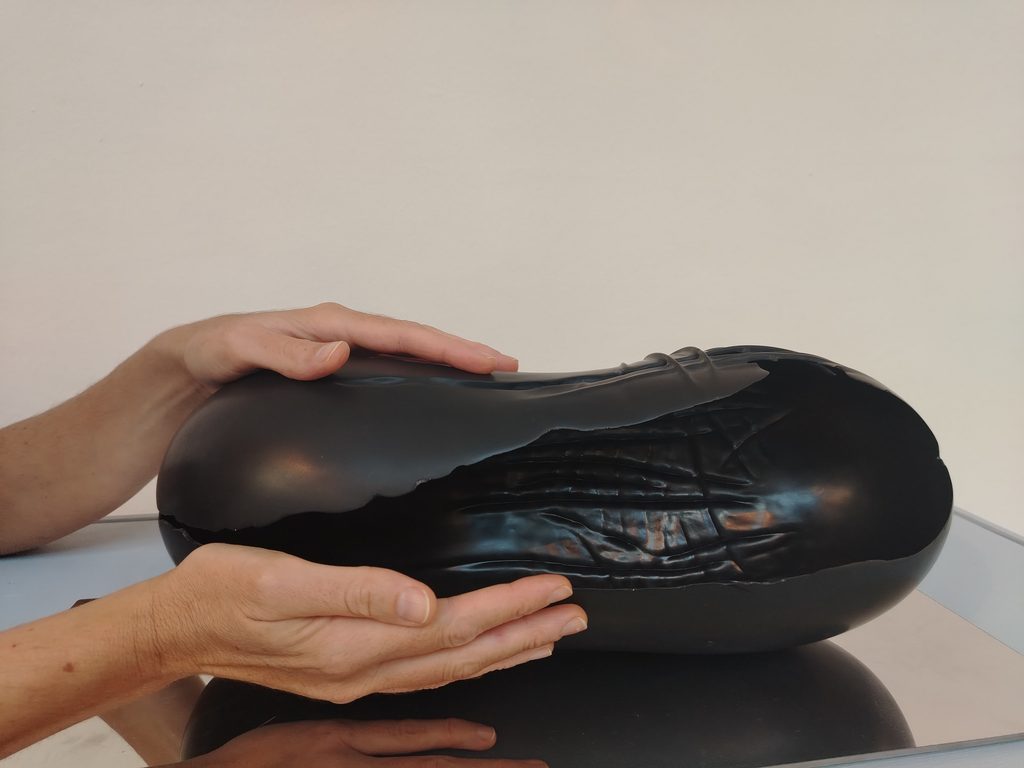
Over the Skin
At mudaC, you’re showing Over the Skin, a meditation on skin. How did the piece come about?
Over the Skin grew out of ideas that took shape during my time abroad. Skin is the most intimate boundary between our inner world and outer reality. Beyond protecting us, it acts as a true emotional screen: when we feel something, our skin reacts.
Skin speaks when we can’t. It’s our emotional and relational calling card, a bridge between our biology and our personal and social history.
The surface of the work becomes the place where personal identity opens onto collective identity. Barriers fall away, and beneath the various cultural or biological “layers,” what we share most deeply comes through: our common humanity.
Nests, Cocoons, Chrysalises: Leaving a Trace
Your series Nests, Cocoons, Chrysalises, which includes Enwrapping, draws its forms from the most fleeting aspects of the living world. Is sculpting a way for you to stop time?
Entrusting an emotion to marble makes it immortal. It crystallizes a fleeting moment in a work meant to outlast time. Carving is a subtractive process, an intimate dialogue with the material that demands a great deal of discipline. Time stands still while the stone takes shape and my thoughts slowly find their form.
In this series, I start by observing the most delicate forms in nature. Nests, cocoons, and chrysalises shelter life; they’re places of passage, protection, and transformation. That ambivalence is what interests me. These forms look fragile, yet they hold tremendous vital force.
With its solidity and its capacity to endure for centuries, marble stands in stark contrast to their precariousness. I’m fascinated by the idea of translating an ephemeral form into a material made to last, without erasing its original fragility.
Scale matters too. By enlarging these small natural architectures, I invite viewers to linger over details that usually escape us, and to see what we tend to dismiss as insignificant.
In the end, I’m not necessarily trying to stop time, but to leave a trace of what, in nature, is bound to change.
From the Italian Masters to Japan
Marble is the material of sculpture’s greatest masterpieces. Has that legacy inspired you, or did you have to break free of it?
I grew up with the giants of Italian sculpture, Michelangelo, Bernini, and Canova, whom I studied and loved from a very young age. I wanted to understand how these masters worked the material with such rudimentary tools. Later, Giuliano Vangi and Novello Finotti taught me how to look at figurative sculpture and why it had to evolve.
I was also drawn to Japan. I had long admired Isamu Noguchi and the deep connection he forged between material, space, and nature. Meeting the artist Maki Nakamura was a turning point. With her, I learned to look at the material more closely, to respect its character, and to understand the value of simplicity, balance, and gesture. What she passed on to me wasn’t a style, but another way of feeling and seeing. I regard her as one of my mentors, alongside the Belgian sculptor Dominique Stroobant.
The rigor with which I compose planes and surfaces also owes a great deal to Max Bill, a leading figure of Concrete art, and to the way he organized space through pared-down geometry and the interplay of proportions.
Over time, my relationship with these masters has changed. It’s not about distancing myself from them, but about finding my own path. What I admire shouldn’t become a model to copy.
“My Material, My Place”
At a time when artists have an enormous range of materials and media at their disposal, what still draws you to marble?
Marble has its own history, its own identity. It’s alive. That piece of rock took millions of years to form. It’s not just a support for my sculptures: carving it means connecting our fleeting human time with the deep time of nature. It’s my material, my place.