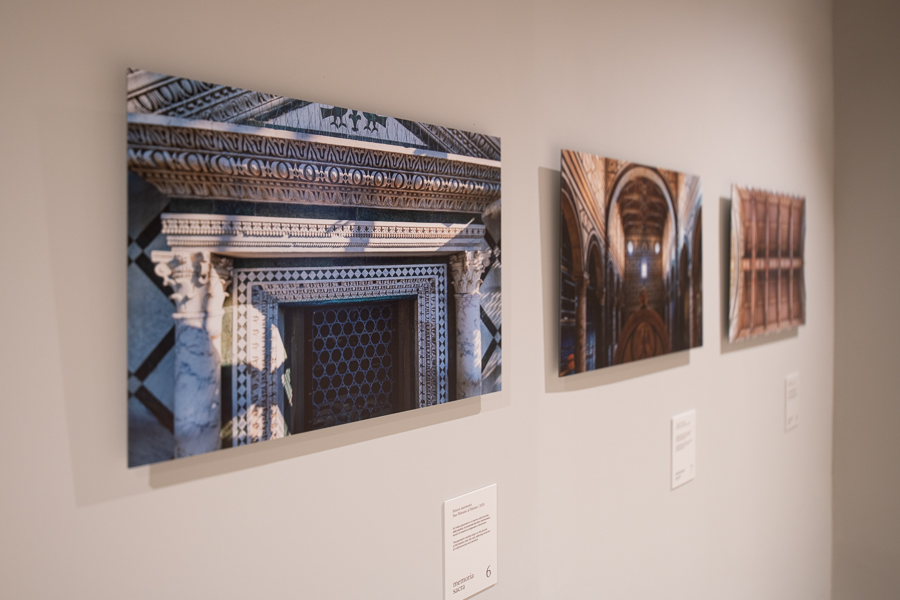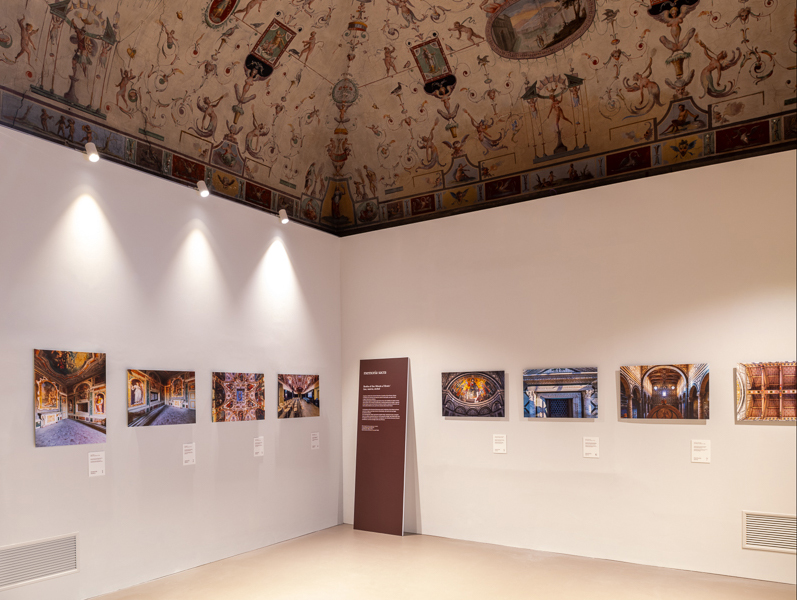
To mark the 50th anniversary of the European University Institute (EUI), and in the presence of the President of the Republic, Sergio Mattarella, Florence is opening a new historic space dedicated to public heritage regeneration projects: the Sala del Demanio. Located at the heart of the Palazzo Buontalenti, recently restored by the State Heritage Agency, this hall hosts the first institutional exhibition by British artist Gina Soden. Conceived especially for the occasion, her series brings together a dozen previously unseen works created from three iconic Florentine sites — the Palazzo Buontalenti, the Basilica of San Miniato al Monte and the former Caserma Redi. The photographer explores the memory and beauty of historic sites undergoing transformation. Her exhibition forms part of the OPEN exhibition, which brings together seven contemporary artists and the research of Johanna Gautier-Morin, an EUI alumna, marking the opening of a new cultural space where heritage, art and education converge. We interviewed the artist to find out more about this exhibition, which opened on 7 May and runs until 12 October 2026.
This is your first institutional exhibition, an important milestone, congratulations! Can you tell us how and when this project was born?
Gina Soden: Thank you! This project began earlier this year through my collaboration with Agenzia del Demanio, whom I have been working with since early 2025, documenting historically significant public buildings across Italy that are currently being restored, reimagined, or brought back into public use. What initially drew me to the project was the opportunity to photograph places that exist in a kind of in-between state. Over time, Florence became a particularly important chapter within that journey, and the idea for Memory and Vision was created by Claudia Caputi, Director of Communications at the agency. Having my first institutional exhibition take place in such a historically significant city, and within the newly restored Sala del Demanio at Palazzo Buontalenti, feels incredibly meaningful to me. The whole exhibition is part of a huge project and celebration of the European University Institute’s 50th Anniversary.
The project speaks about transformation and the regeneration of public heritage. How does your perspective fit into that narrative?
Gina Soden: Much of my work has always explored themes of memory, impermanence, and transformation through architecture. Although people often associate my practice with abandoned places, I have never been interested purely in decay itself. I’m interested in the emotional atmosphere held within spaces, and have a general passion for architecture. This project felt like a natural extension of that. These sites are not simply being preserved as monuments, they are being given new cultural and civic purpose in some cases too. My role was not to document restoration in a technical sense, but to interpret the emotional and historical layers that still exist within these environments during moments of transition.
Can you explain us the genesis of the exhibition title: Memory and Vision?
Gina Soden: The title Memory and Vision reflects the relationship between remembrance and transformation that runs throughout the exhibition. “Memory” refers not only to the physical traces embedded within these buildings, but also to the collective remembrance, cultural identity, and shared histories they carry through generations. “Vision” represents the future of these spaces, their regeneration, reinterpretation, and renewed role within public life. Together, the title speaks about the importance of preserving heritage while also imagining how it can evolve for future generations. It also reflects my own photographic process, where observation becomes interpretation rather than straightforward documentation.
Florence is a city full of history and cultural heritage. How does one still find something unseen or unexpected in such a context?
Gina Soden: Florence is one of the most photographed cities in the world, so I knew from the beginning that I didn’t want to create predictable images of familiar landmarks. What interested me were quieter moments, details that are often overlooked, temporary states of restoration, fragments of surfaces, changing light, hidden rooms, traces of repair, or spaces that are inaccessible to most people. I think there is always something unseen if you approach a place slowly enough. Even in cities layered with history, there are still perspectives waiting to be discovered.
You created especially for this project 12 works, focused on three major Florentine sites: Palazzo Buontalenti, San Miniato al Monte, and the former Caserma Redi. What drew you to each of them? What intrigued you about these places?
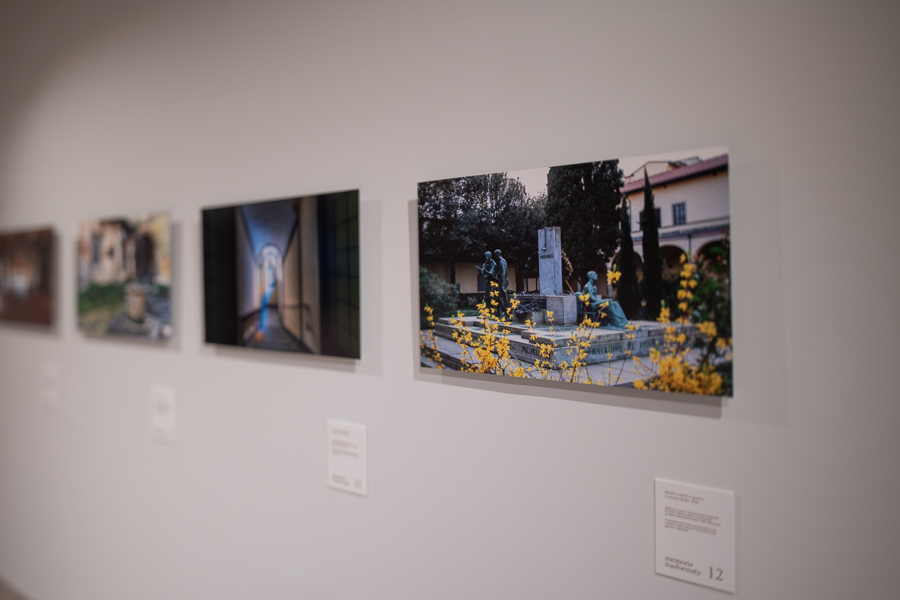
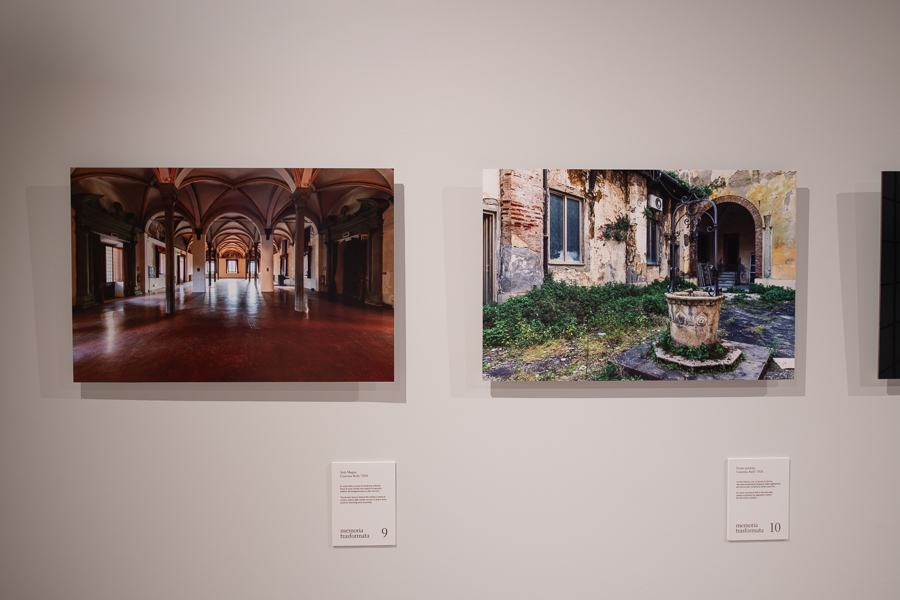
Gina Soden: Each site represented a very different kind of relationship with history and transformation. Palazzo Buontalenti fascinated me because of its extraordinary layered history and because the building itself is now entering a new public chapter through restoration and cultural reuse. Basilica di San Miniato al Monte felt deeply spiritual and timeless, almost suspended outside of ordinary time, with incredible textures, light, and atmosphere throughout the spaces I was able to access. The former Caserma Redi was very different again, more raw, fragmented, and transitional, carrying visible traces of abandonment alongside signs of future regeneration. Together, the three sites created a dialogue between permanence, memory, neglect, restoration, and renewal.
The historical places you photographed for this project were not abandoned, but in the midst of transformation. How did this change your artistic approach or perspective?
Gina Soden: It changed my perspective quite significantly. In many previous projects I photographed spaces after they had already fallen silent or been completely forgotten, with no one around me. Here, I was working within buildings actively in transition, places where restoration teams, architects, historians, and institutions were all involved in shaping a future identity. I had people all around me at all times, which was a bit distracting at times!! There was a very different energy to that. At the same time, several of the sites still carried strong traces of abandonment and disuse. Caserma Redi in particular remains largely abandoned, while parts of Palazzo Buontalenti are still awaiting transformation. That contrast fascinated me. I became increasingly interested in the tension between deterioration and renewal, and in capturing moments where the past and future seemed to coexist within the same space.
For this project, you have introduced a new element: a focus on fragments and details as well as architectural views. What motivated that choice?
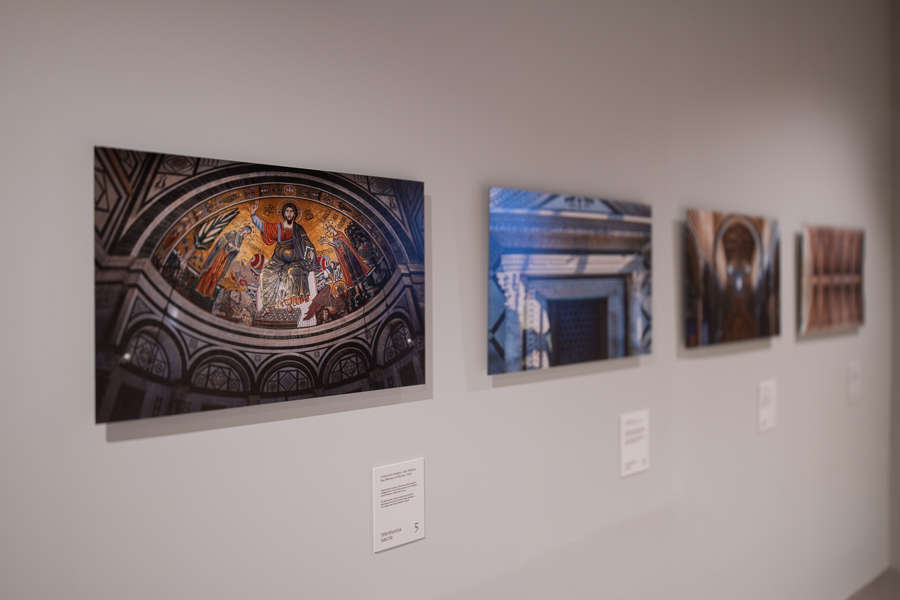
Gina Soden: I wanted the work to feel more immersive and intimate. In previous series I often focused heavily on wider architectural compositions, but for this project I became increasingly drawn to fragments and details, peeling surfaces, damaged frescoes, marks, textures, and light falling across materials, because they carried such strong emotional and historical presence. These details almost became portraits of the buildings themselves. They allowed me to move beyond architecture as structure and towards architecture as memory. There was also a practical element to this shift. Agenzia del Demanio had provided a brief that encouraged me to explore the historical and cultural identity of the sites, although it remained fairly open artistically. Each location came with different levels of access and restrictions, which naturally influenced the way I worked. At San Miniato al Monte, for example, the whole of the facade was covered in scaffolding and it was still open to the public, being one of the most historically and architecturally significant churches in Florence, and one of the finest examples of Romanesque architecture in Italy. So I ended up photographing sections of the building from a cherry picker to gain perspectives that would otherwise have been impossible. At Palazzo Buontalenti, parts of the building were still functioning as an active institute during my visit, so I had to work respectfully around daily activity and be very instinctive about what to photograph without disrupting the environment. At the same time, I was conscious that these images were being created for a very important exhibition in my career. Caserma Redi felt closer to the environments I am more familiar with, quieter and more contemplative, with a sense of stillness that allowed for a different kind of observation.
Which work in the exhibition feels the most emblematic of the project, and why?
Gina Soden: There is one work from Caserma Redi – Fonte Perduta – that feels particularly emblematic of the project because it captures several themes simultaneously, abandonment, transition, fragility, and future possibility. The image contains visible traces of decay but also subtle evidence of intervention and renewal. For me, it represents the central tension running throughout the exhibition: the moment where history has not disappeared, but is actively being reinterpreted.
How did you imagine the display within the newly restored Sala del Demanio?
Gina Soden: The newly restored Sala del Demanio, with its remarkable 16th century frescoed ceiling and strong architectural identity, already carries such a powerful atmosphere that I wanted the exhibition to feel sensitive to the space rather than overpower it. I imagined the works almost as quiet interruptions within the room, allowing visitors to move slowly between them and notice connections between surfaces, textures, and atmospheres across the three sites. During the opening, it was wonderful to see people looking equally closely at both the artworks and the extraordinary ceiling above them, almost moving visually between the exhibition and the architecture itself. That dialogue between the works and the restored historic space became an important part of the experience.
What do you hope visitors will feel when they enter the room and encounter these 12 works?
Gina Soden: I hope visitors feel a sense of atmosphere and contemplation when they enter the room. I would like them to slow down and notice the emotional qualities within these spaces rather than simply seeing them as historical buildings. More than anything, I hope the exhibition encourages people to think about how architecture carries memory, and how restoration can become not only an act of preservation, but also an act of cultural imagination. One of the most rewarding parts of the opening was hearing people tell me they had no idea some of these spaces even existed, especially areas within Palazzo Buontalenti and, in many cases, Caserma Redi itself. So many visitors came up to me speaking in Italian, asking where the locations were and wanting to know more about them. That was really special for me because it felt very meaningful to be able to share these spaces with others for once, and to see people becoming curious about parts of their own city that had remained unseen or inaccessible for so long.
You told us that two more exhibitions will soon open in Italy. Can you tell us more about them? Are they connected to this project?
Yes, two further exhibitions connected to this wider Italian collaboration will open soon in Palermo, alongside another exhibition opening in June in Florence at the historic Villa Bardini, one of the city’s most important cultural and exhibition spaces overlooking Florence. All of them continue my exploration of public heritage sites undergoing transformation through the work of Agenzia del Demanio. While the current Florence exhibition focuses specifically on three Florentine sites and has a more contemplative atmosphere, the Palermo exhibitions expand the narrative geographically and architecturally, bringing together a much wider range of locations across Sicily. The exhibition at Villa Bardini will introduce additional Tuscan sites that I photographed during the project, alongside different perspectives of Palazzo Buontalenti, Caserma Redi, and San Miniato al Monte that are not included in the current exhibition. Together, the exhibitions form part of an ongoing body of work exploring regeneration, remembrance, and the evolving identity of public spaces in Italy. A selection of works from the project will also be available as limited edition prints.