2025 I series


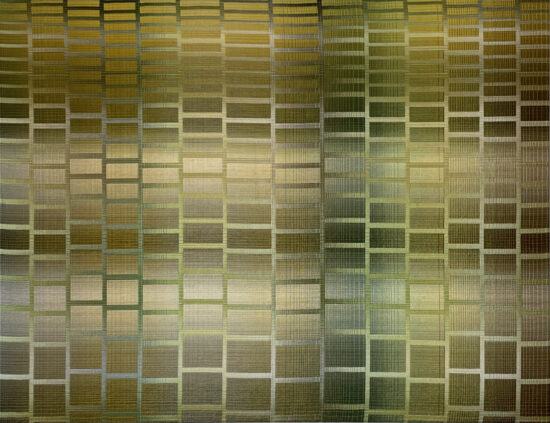

2024 II series

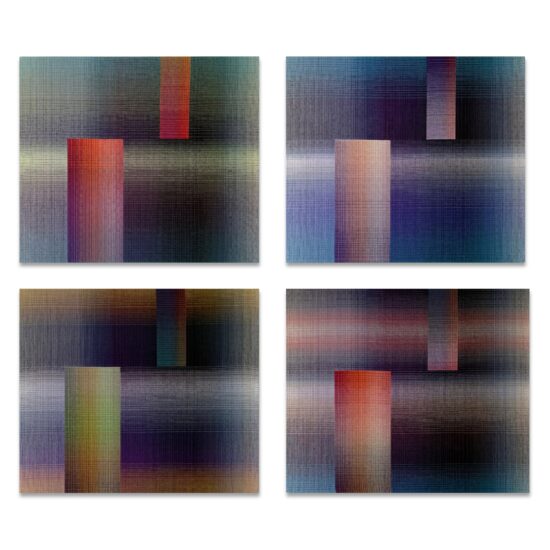
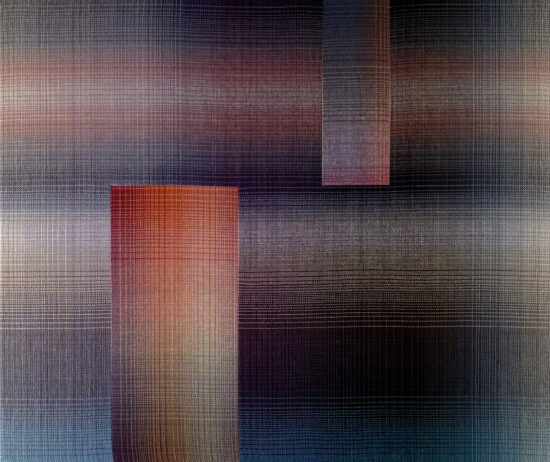
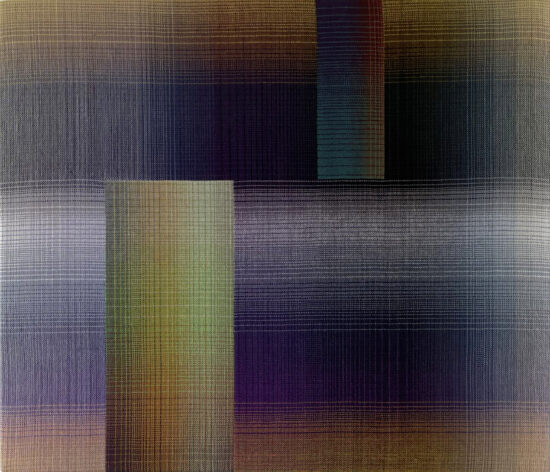

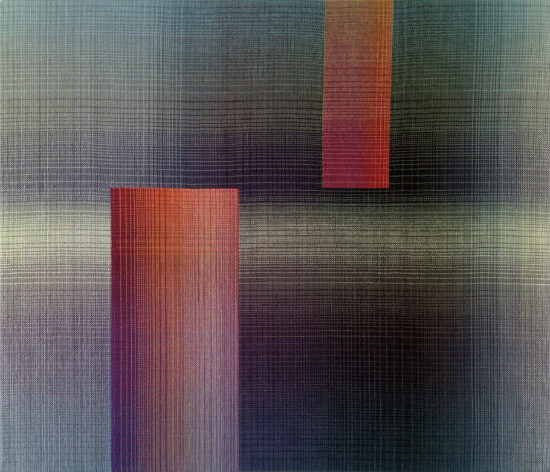

2024 I series

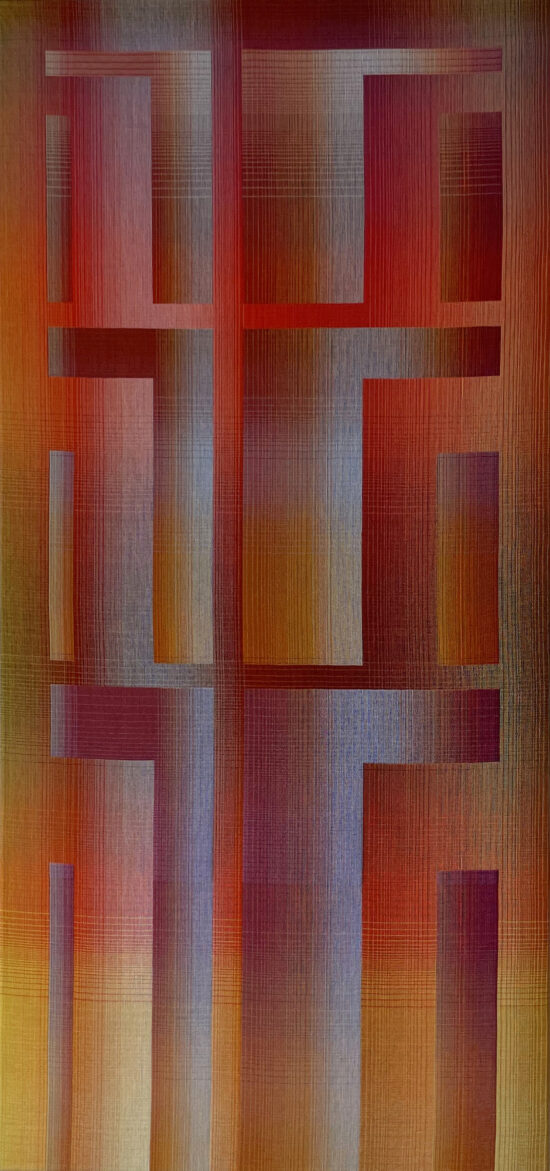
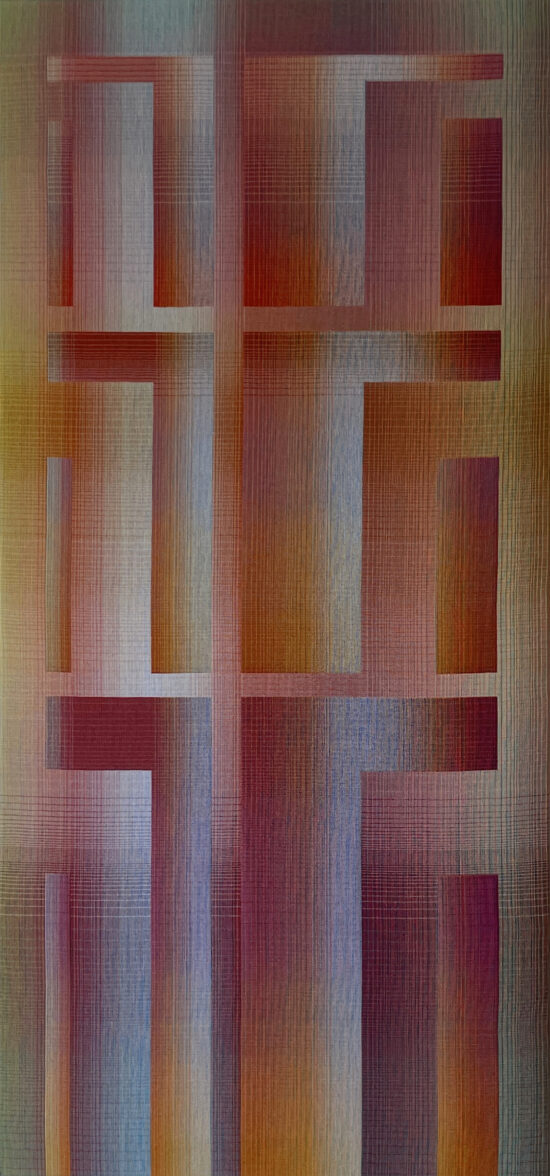

2023 III series


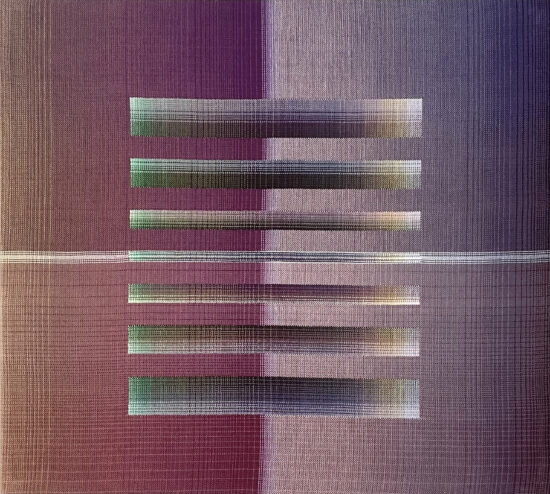
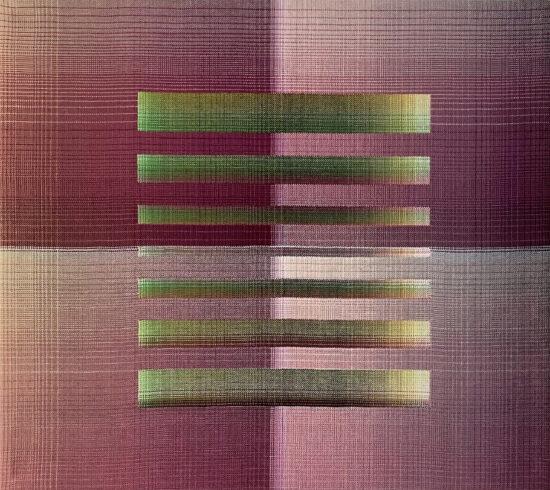

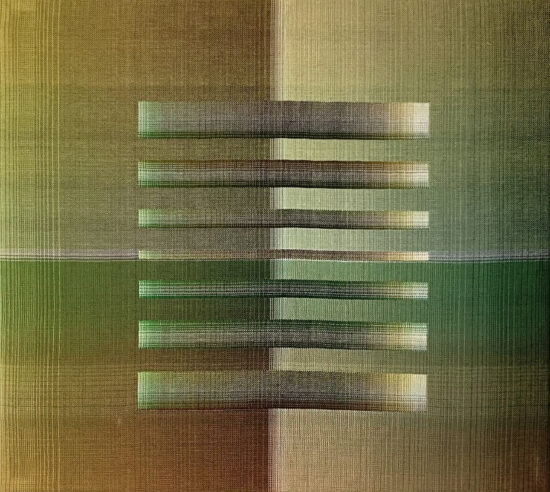

2023 II series


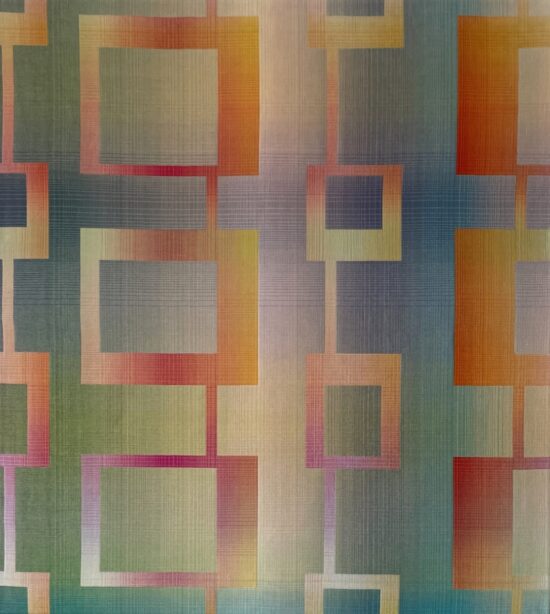
2023 I series


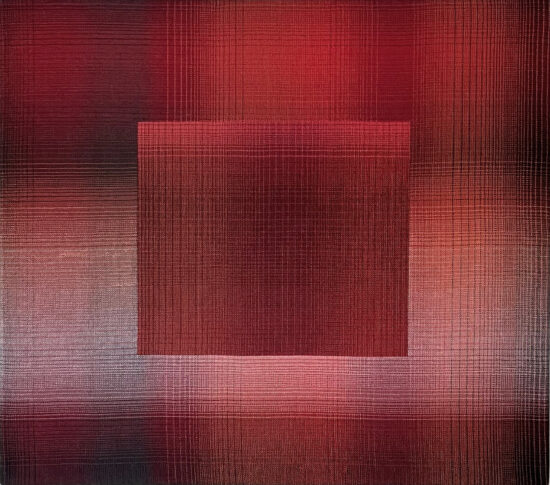


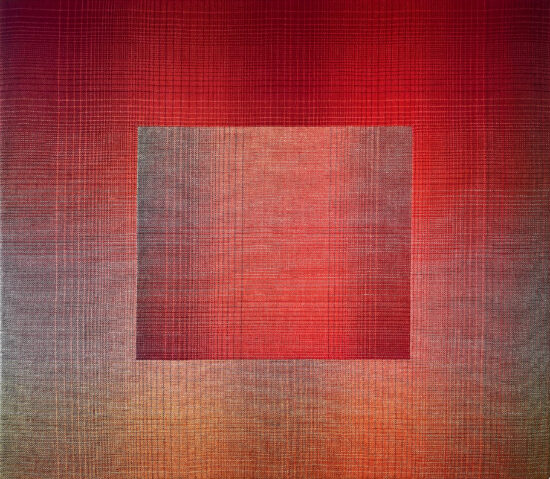





2022 I series


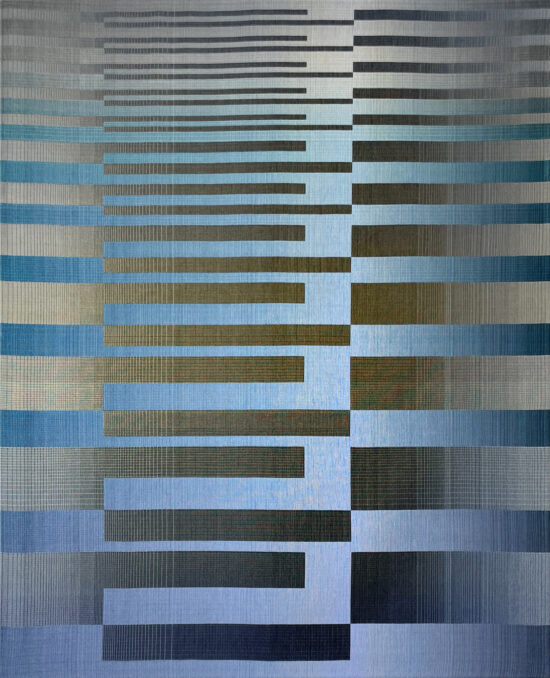


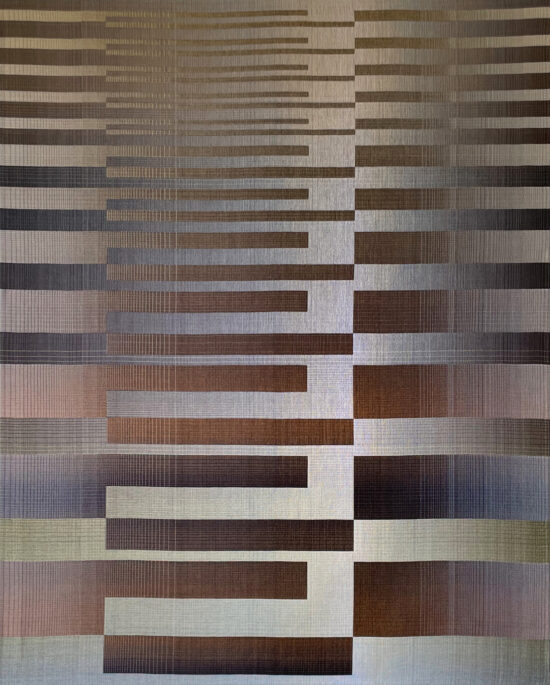
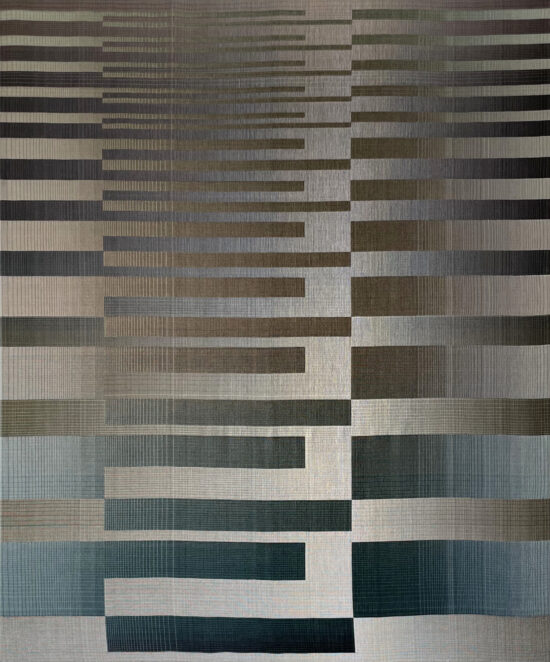
2021 II series


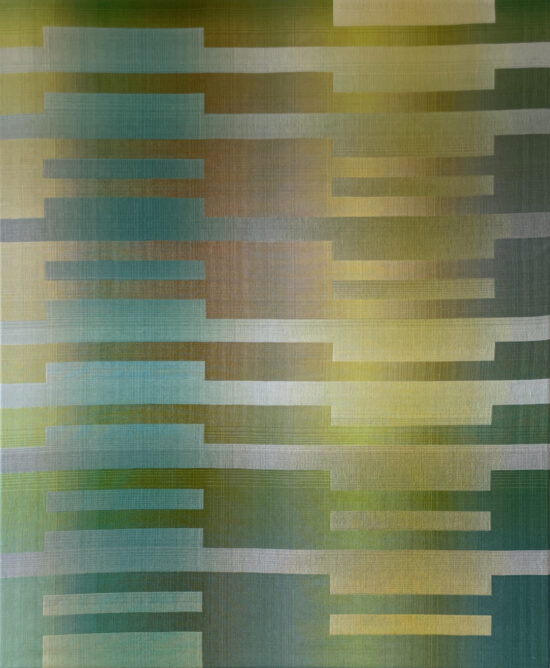

2018 I, 2020 IV, 2020 V & 2021 I series


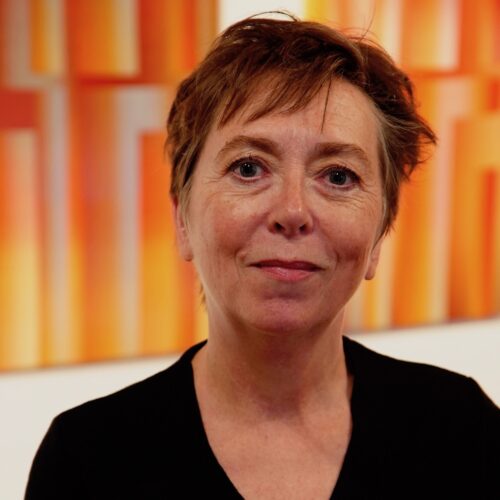
Biography
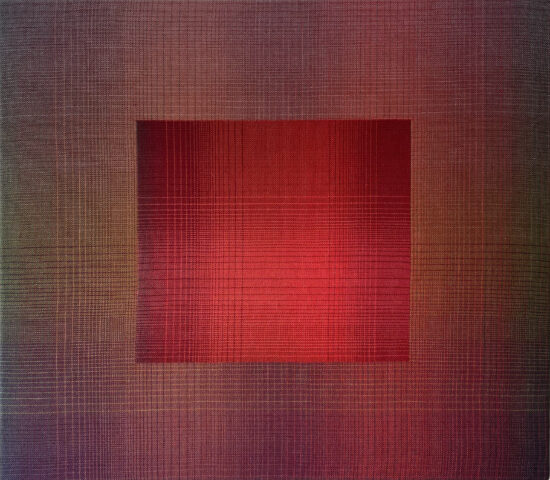
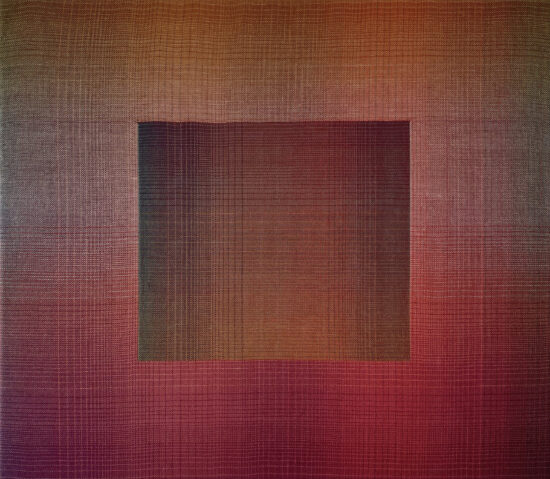
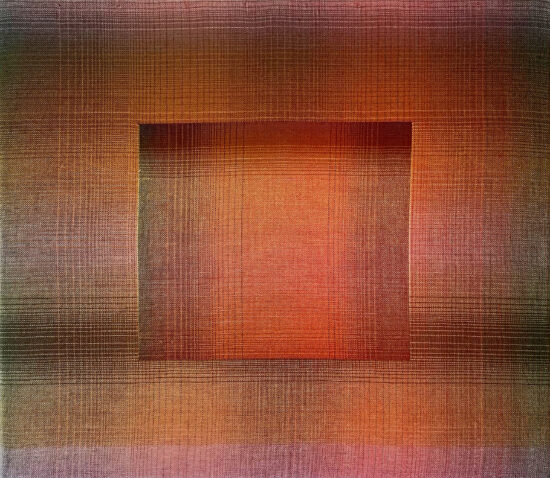
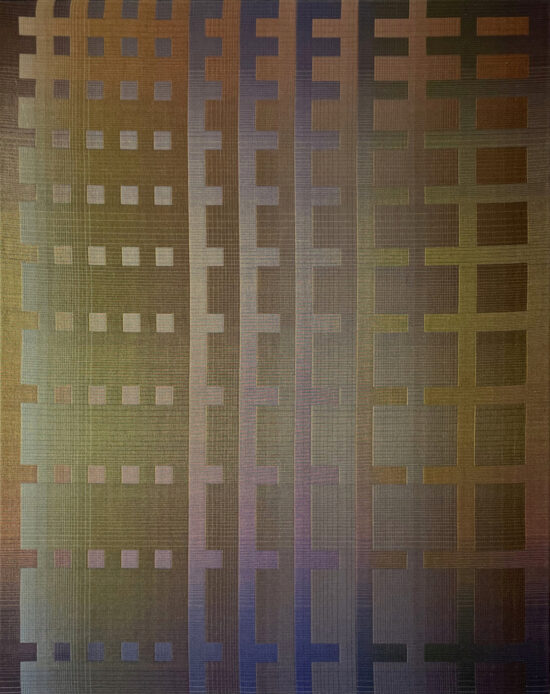
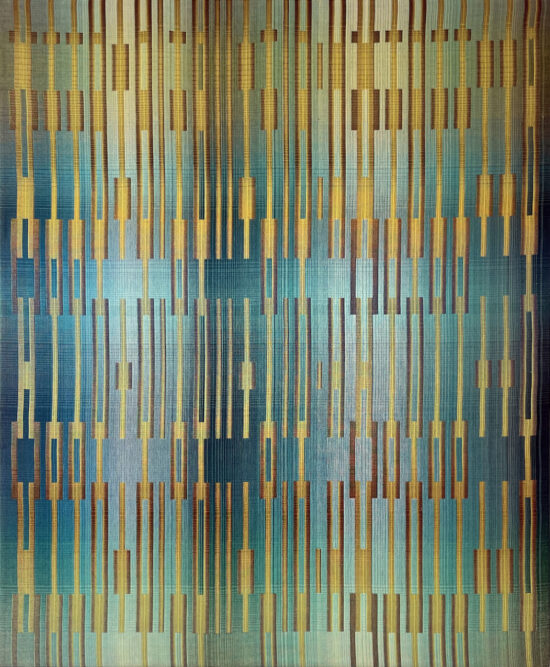
Christiane Maurer’s abstract works explore how we perceive and interact with colour. Created through a process that combines traditional skills and digital methods, they reveal changing nuances and subtle iridescence according to the light in their environment and the movement of the viewer.
Christiane Maurer: from industrial designer and researcher to textile artist
Christiane Maurer was born in Germany in 1963 and has lived in the Netherlands for over 30 years. She works in two workshops: one in The Hague and the other further south, near the border with Belgium and Germany. The artist has always had a passion for textiles and crafts. As a child, she was particularly impressed by the beautiful handmade objects made by the local women in Johannesburg, South Africa, where she lived with her family.
Her studies began with a degree in Industrial Design from Berlin University of the Arts, followed by research into the history of textile design and the perception of man-made objects. During her doctorate at Delft University of Technology in the Netherlands, she went on to specialise in the psychology of perception, and particularly on affordances (those features of an object that suggest actions). Her research deepened her understanding of colour perception and chromatic spaces, which are at the heart of her artistic activity.
After her doctorate, she worked as a designer in the textile industry, developing her technical skills in the process. But she gradually realised that she wanted to make her own creations. So, she bought a loom and began her own, personal, artistic work. Today, Christiane Maurer exhibits her work in galleries, contemporary art spaces and textile art biennales, mainly in Europe. Since 2022, she has been a member of Pulchri Studio, a Dutch artists’ association that has been in existence since 1847.
A creative process that combines tradition and innovation
Contemporary artist Christian Maurer draws inspiration from two sources: first, nature, perhaps the texture of a tree trunk, the changing light on a beach, or the ripples on the surface of the water. The second is emotions, particularly those aroused by a specific colour. From the inspiration comes the idea, and then the main part of the creation begins: using a graphic design program on the computer, the textile artist creates several colour studies to transform her idea into a tangible design. The idea takes shape in a digital ‘key piece’ that brings a series to life. The other pieces in the series are developed as variations on this one, exploring further colour combinations and gradations.
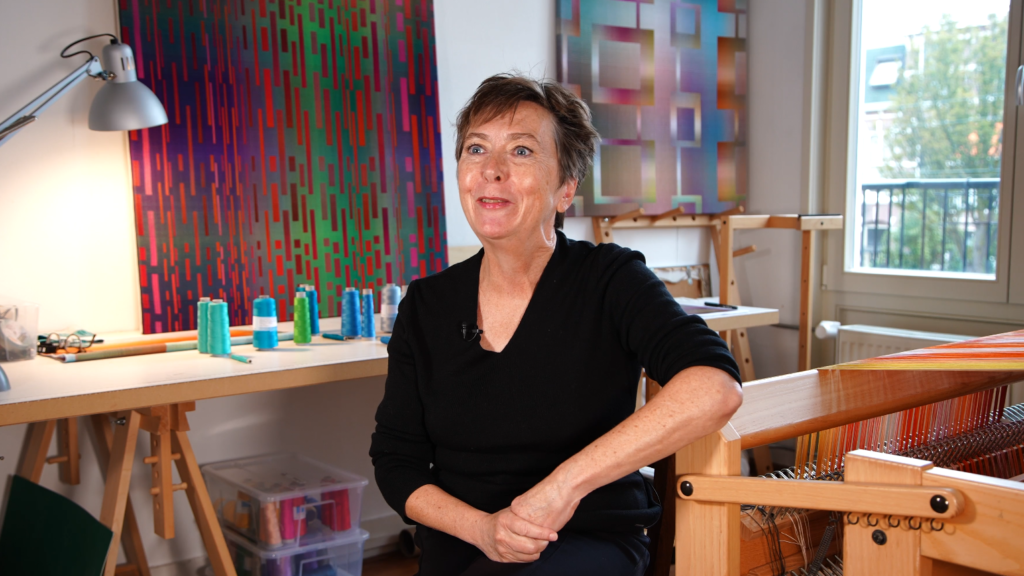
The digital design is then transposed into a weaving draft using another piece of specialist software. This draft is a plan determining the colour of each thread that will be woven into the warp (vertical threads) and weft (horizontal threads), and contains the instructions for weaving the piece. The manual part can then begin: the cotton threads are wound onto the bobbins, placed on a spooling rack in their exact sequence, and the loom is set up and threaded. Plunging into deep concentration, the textile artist begins weaving using the age-old technique of double weaving: two layers of fabric are woven and interact at specific points, swapping their upper/lower positions to form a pattern. Once the work has been woven, it is stretched on a wooden frame like a canvas.
Christiane Maurer’s creative process presents several challenges. First, it involves the transition from additive colours (used on computer screens) to subtractive colours (used in dyes and pigments). Then comes the preparation of the warp, which is a lengthy process and requires a great deal of care and attention: each of the threads (often 2,500 are used) must be in precisely the right place. If it is not, the error will be visible in the weave. However, what really distinguishes this process from others often associated with textile design is the fact that the creative part lies not in the weaving itself but in the digital process that precedes it. The loom is an instrument for realising the artistic idea. Christiane Maurer explains: “Using a loom as inspiration would result in completely different textiles. My ideas couldn’t be realised if I’d put the creativity in the making itself.”
Continuous exploration, series after series
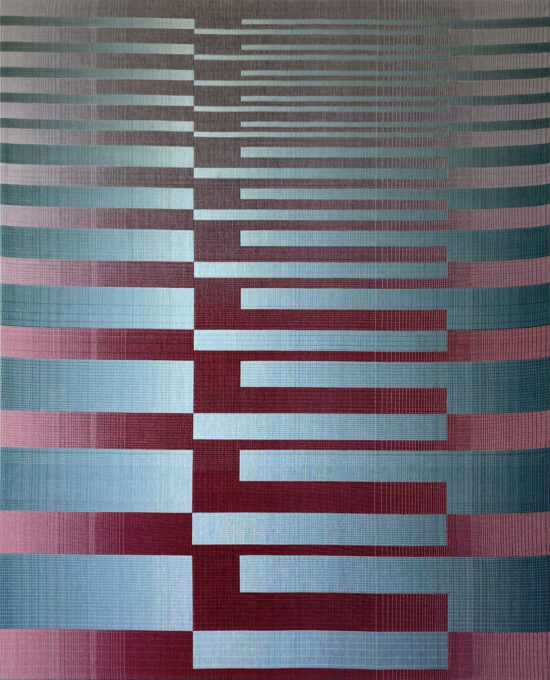
Textile artist Christiane Maurer is motivated by complex scientific research into colours, which almost becomes a challenge: with paint, it is possible to mix colours to obtain others, but with threads in a fabric, it cannot be done. So she must study combinations, interactions, gradations and gradual transitions based on the colours of each thread. To do this, she uses relatively simple geometric patterns: “For me patterns are the places where different coloured lines see each other, seek each other and interact with each other. I realized that I don’t need a lot of patterns; I just need some contours where coloured lines can meet each other and can explode or vanish.”
For Christiane Maurer, each new series is a search for a specific combination of colours and patterns, and the series follow one another in a continuous and constantly evolving journey of exploration. Her contemporary textile art falls under the heading of Fiber art, an artistic movement born after the Second World War that focuses on the use of textile materials (fabrics, yarns, fibres) and pays particular attention to the aesthetic and conceptual aspects of the works.
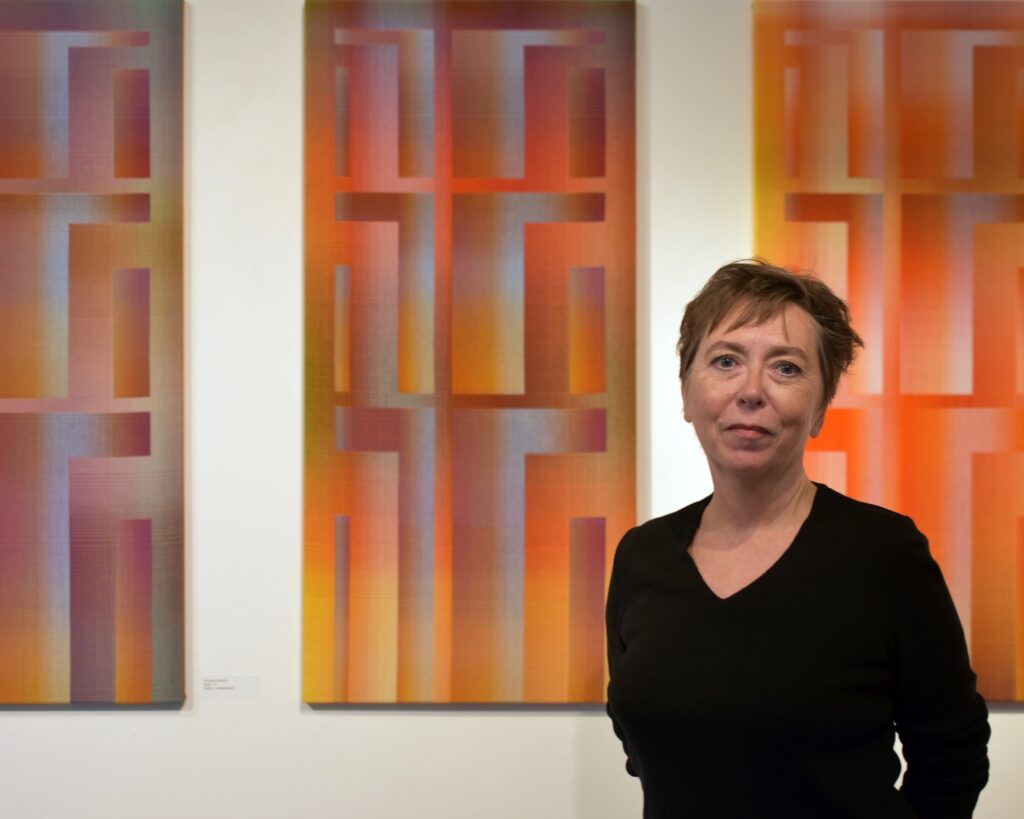
“A Different Approach”, group show, Kandmium, Delft, Netherlands, 2024
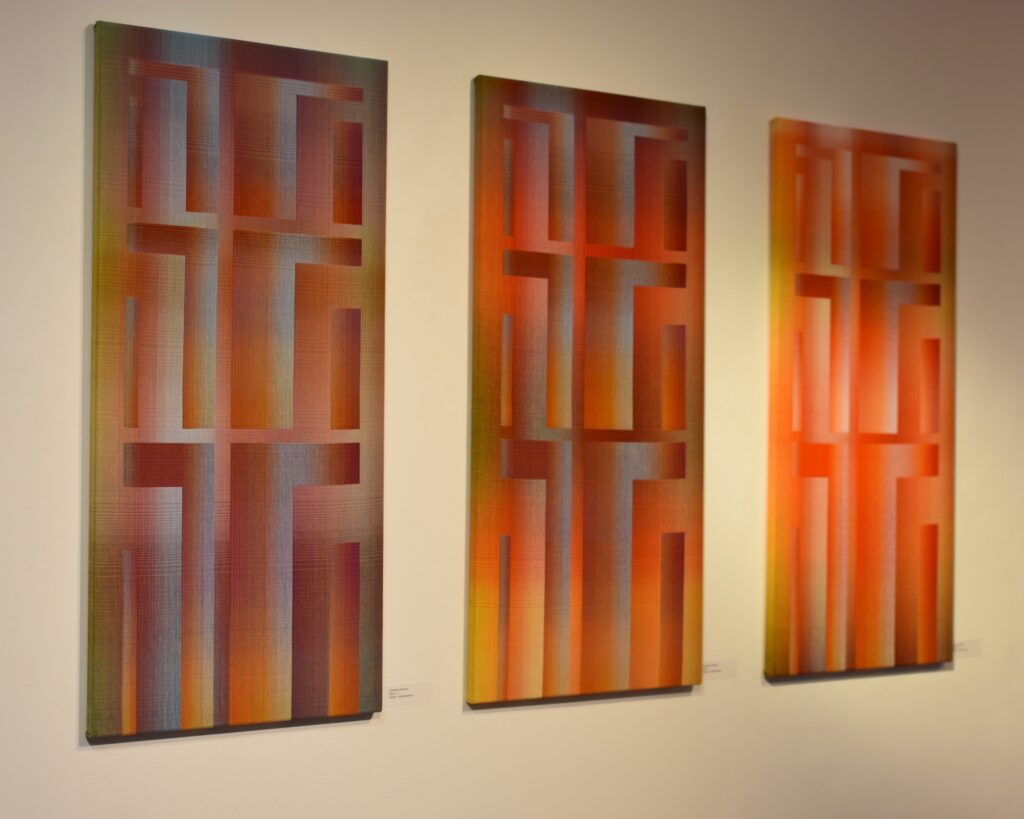
“A Different Approach”, group show, Kandmium, Delft, Netherlands, 2024
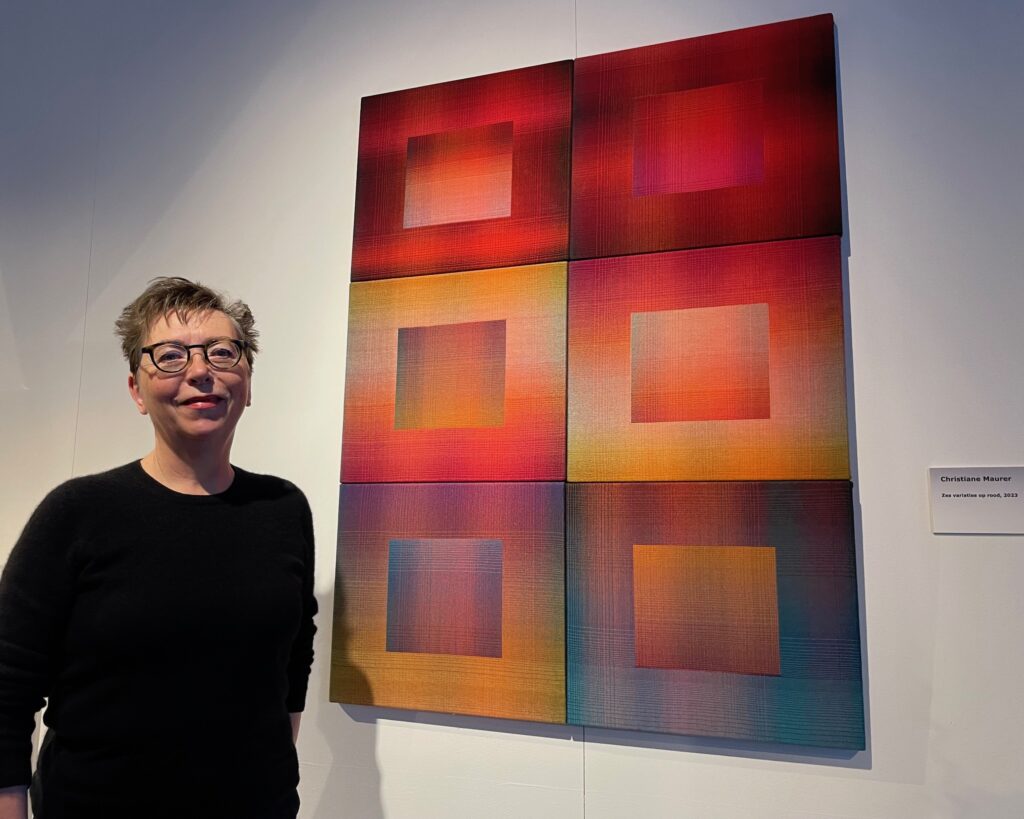
“Hoezo geen vrouwen in de kunst?”, Museum De Kantfabriek, Horst, Netherlands, 2024
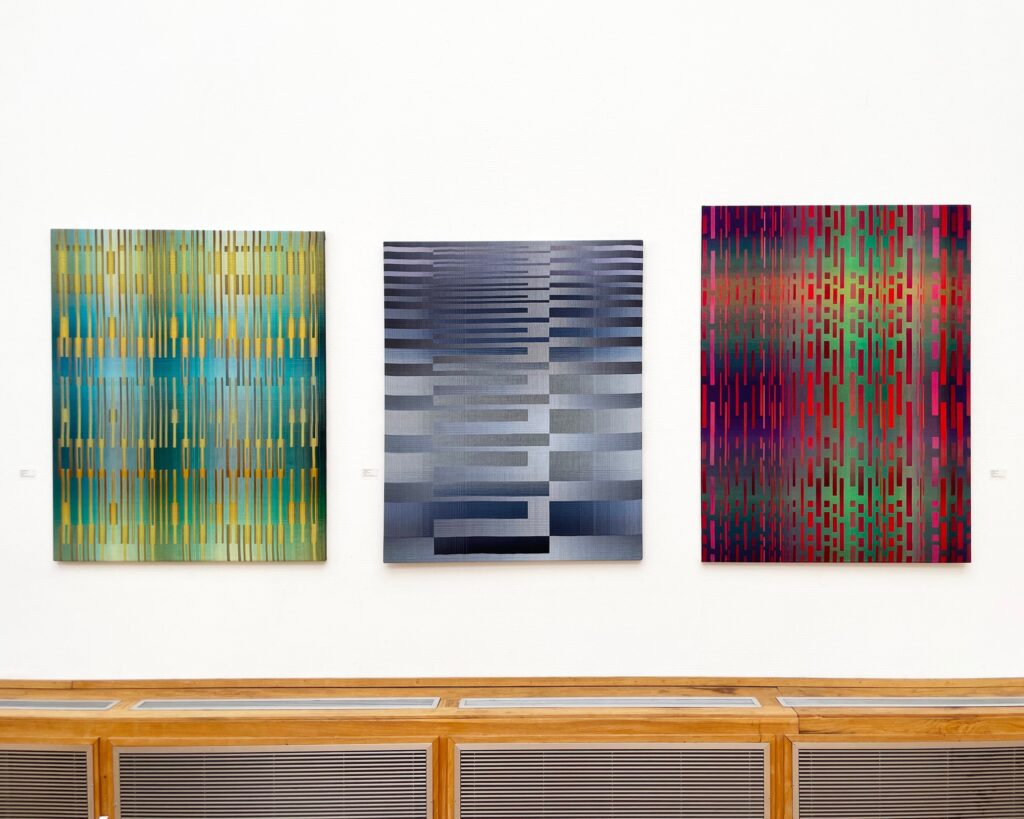
“New Members of Pulchri Studio”, The Hague, Netherlands, 2023
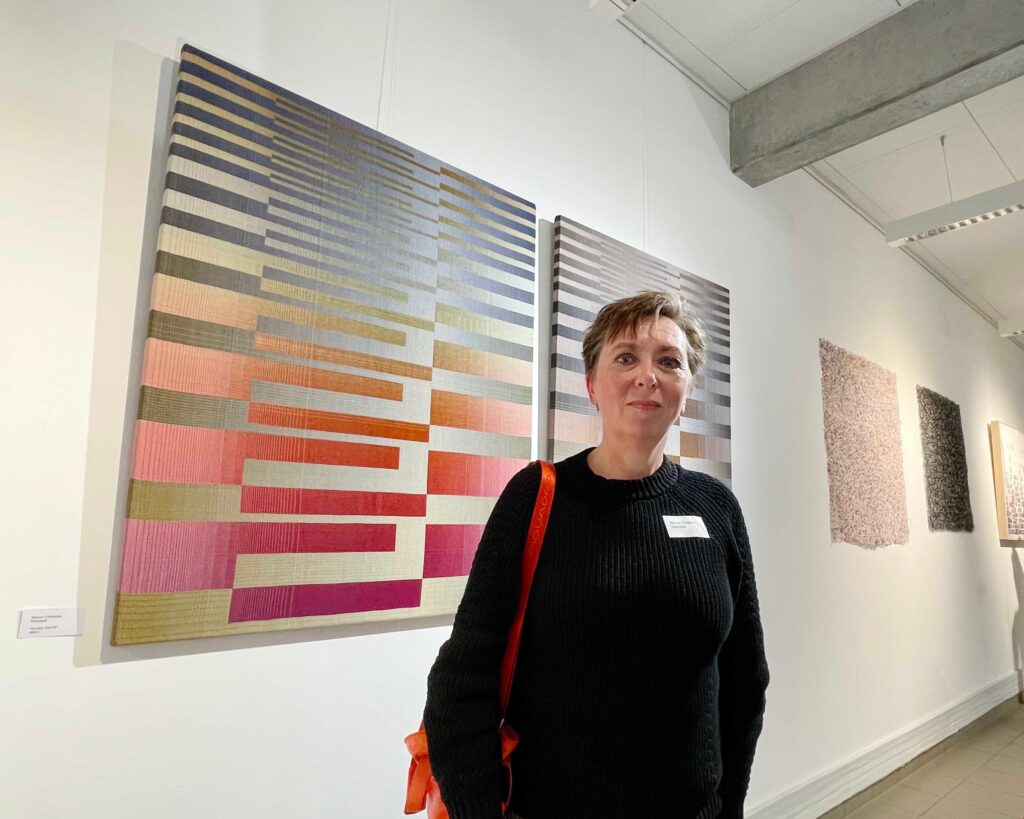
International Textile Art Biennial, Haacht, Belgium, 2022
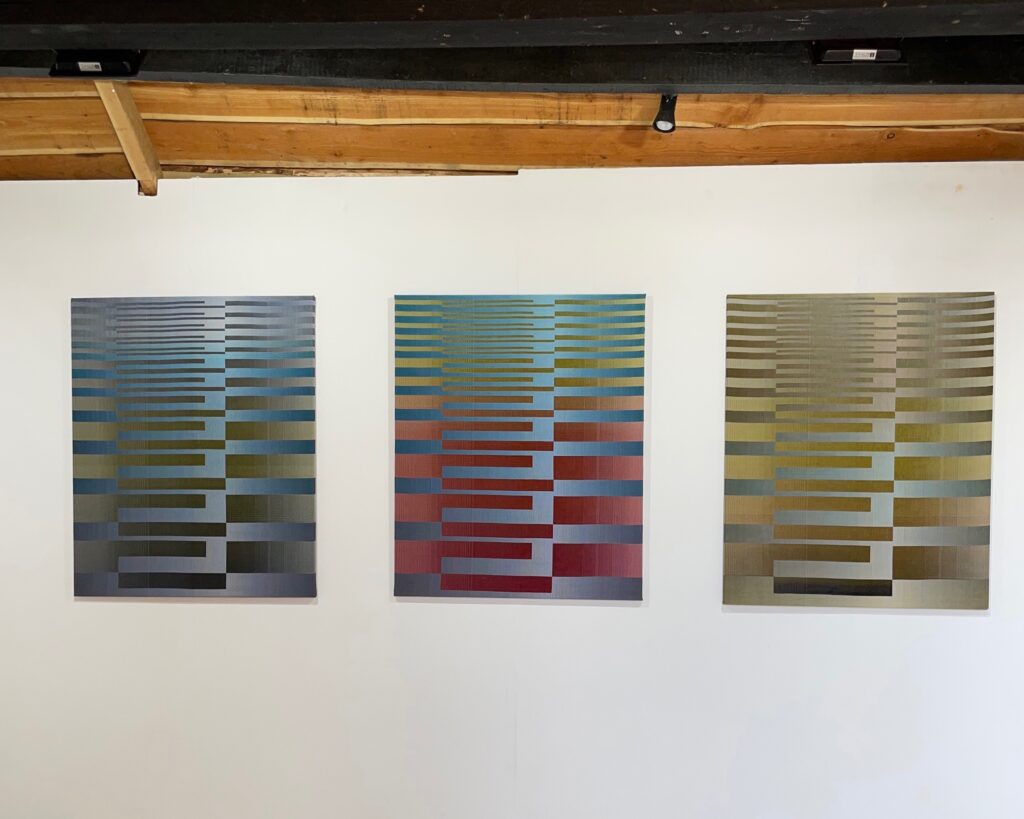
“Uit de schaduw”, Kunstroute Open Stal, Oldeberkoop, Netherlands, 2022
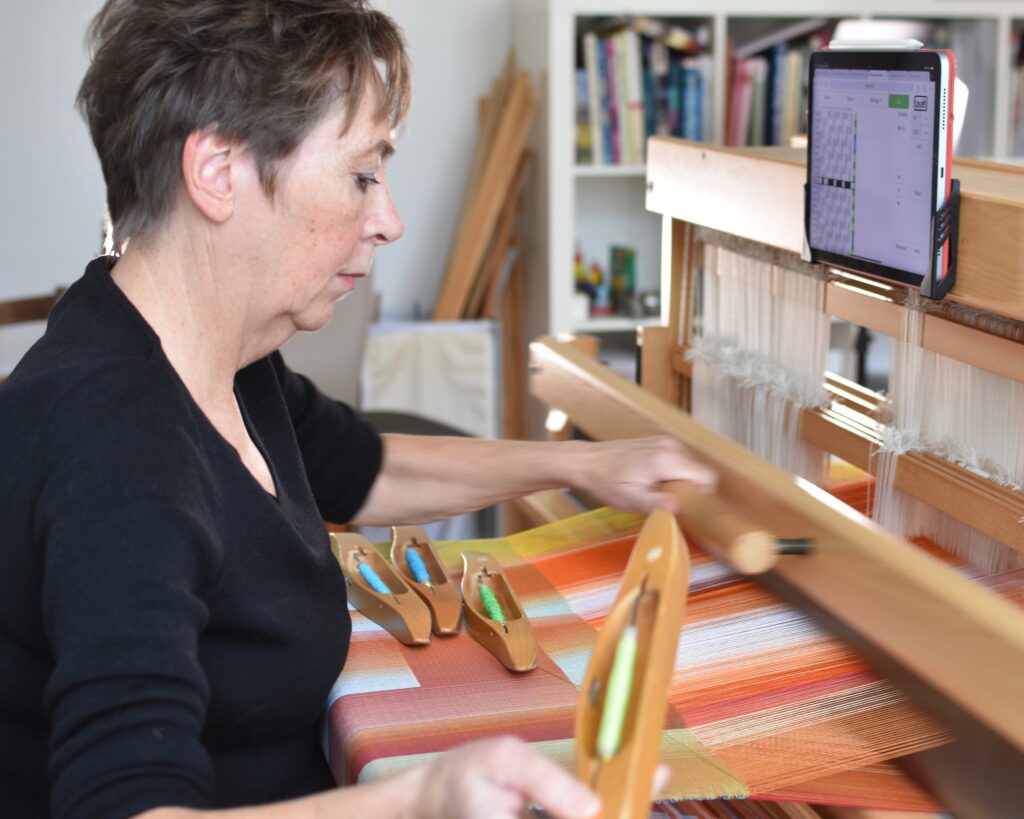
Christiane Maurer working on the loom in her studio, The Hague, Netherlands
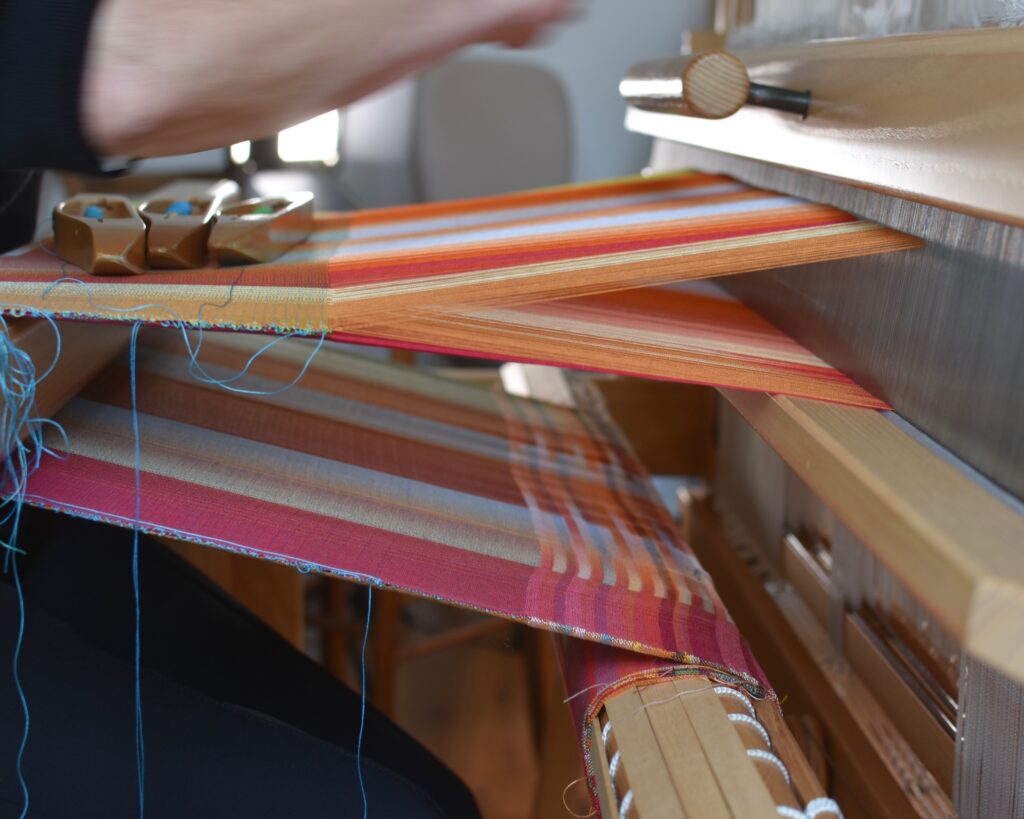
Christiane Maurer working on the loom in her studio, The Hague, Netherlands
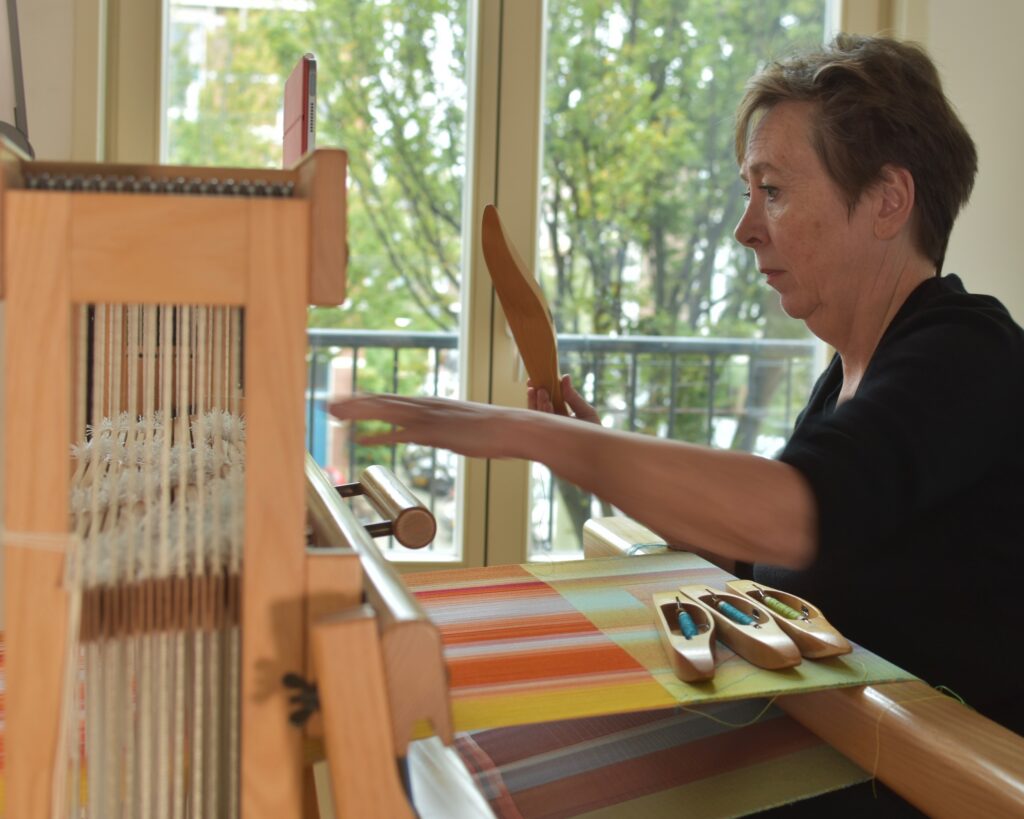
Christiane Maurer working on the loom in her studio, The Hague, Netherlands
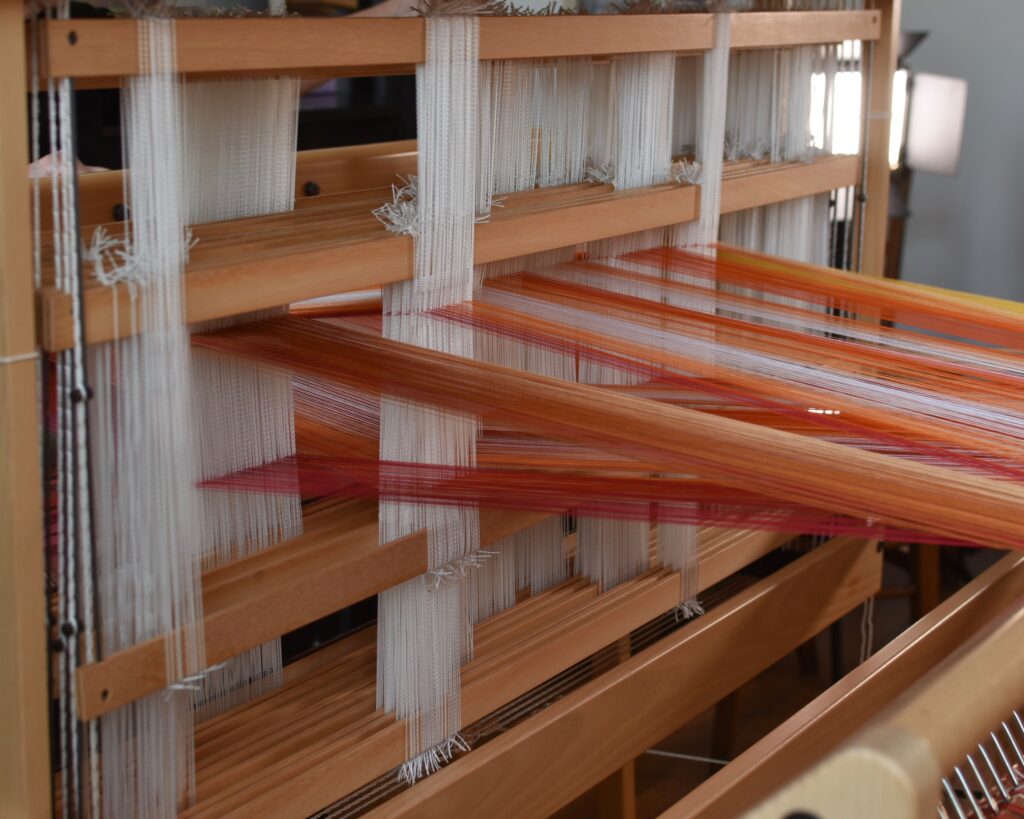
Christiane Maurer working on the loom in her studio, The Hague, Netherlands
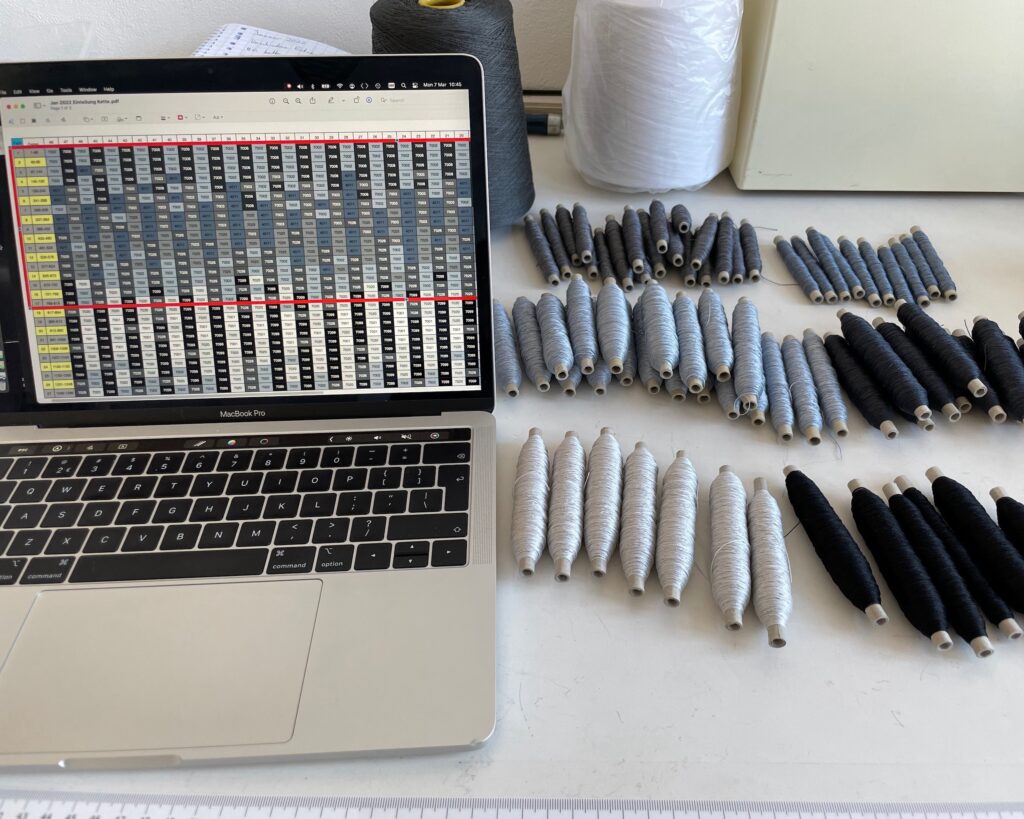
Work in progress in Christiane Maurer’s studio, The Hague, Netherlands
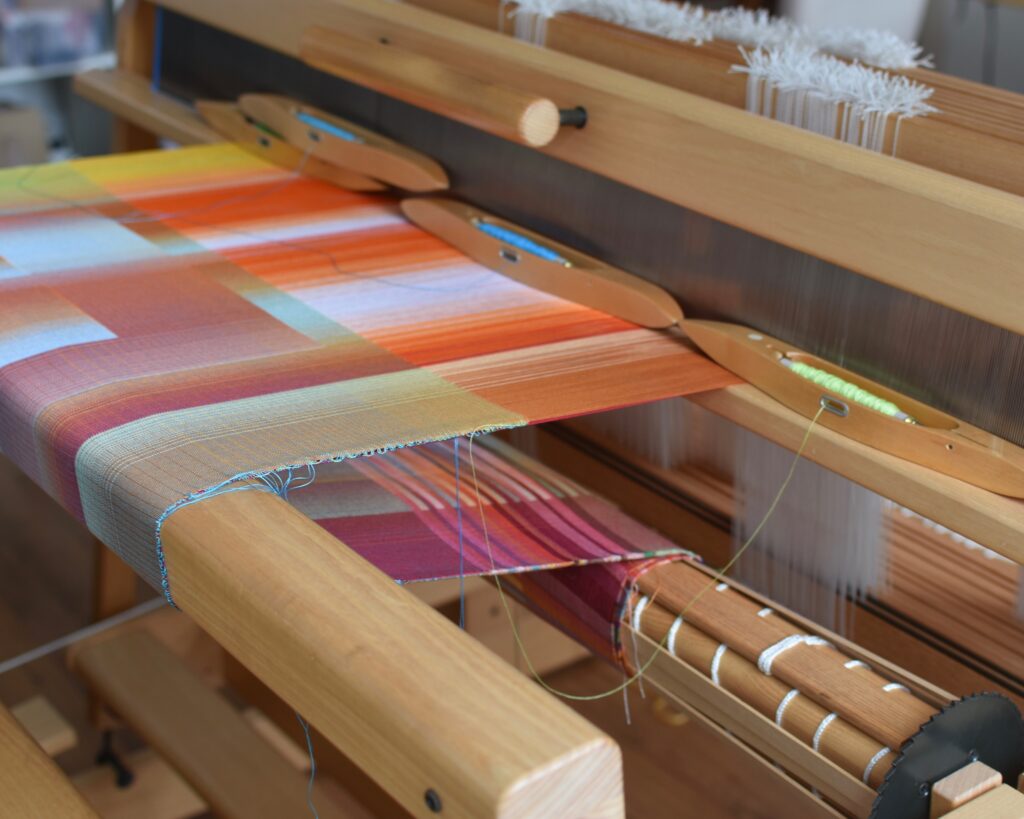
Christiane Maurer working on the loom in her studio, The Hague, Netherlands
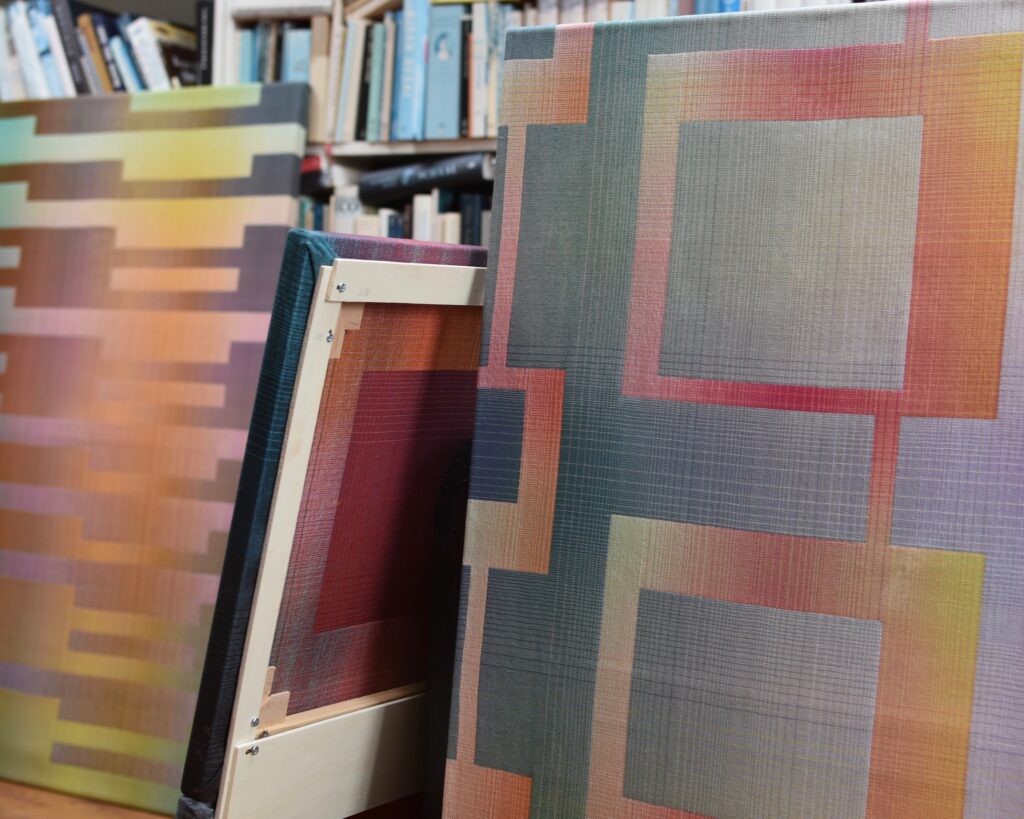
Christiane Maurer’s studio, The Hague, Netherlands
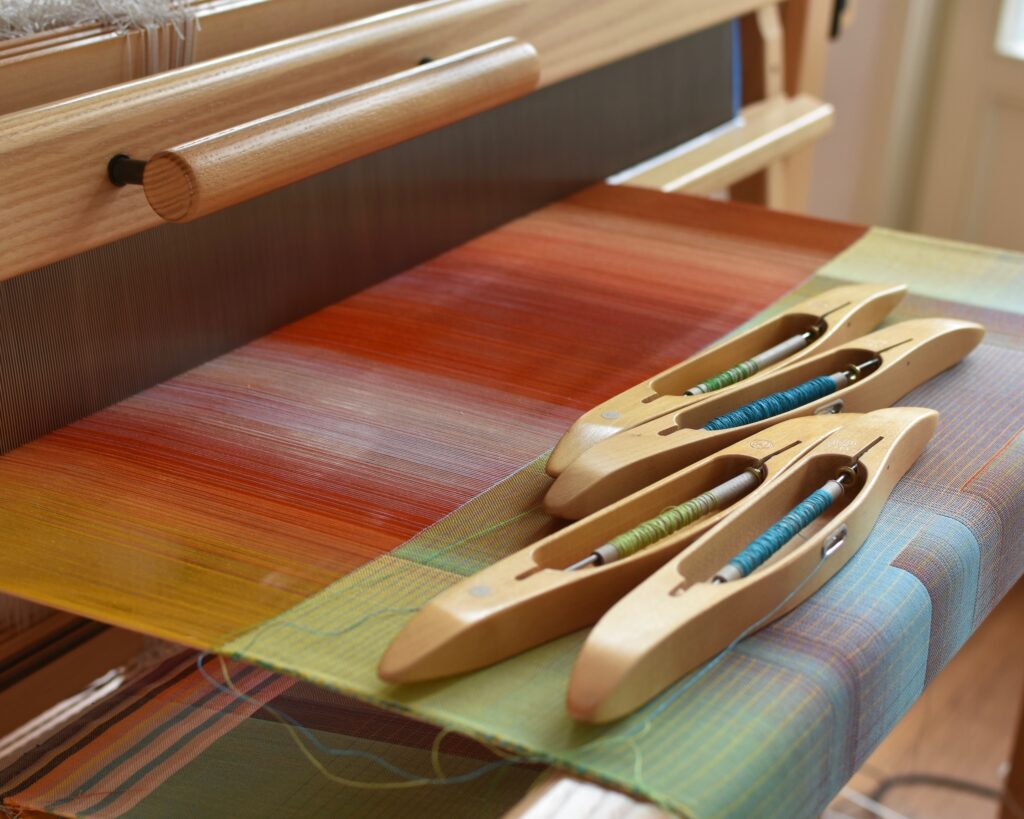
Christiane Maurer working on the loom in her studio, The Hague, Netherlands
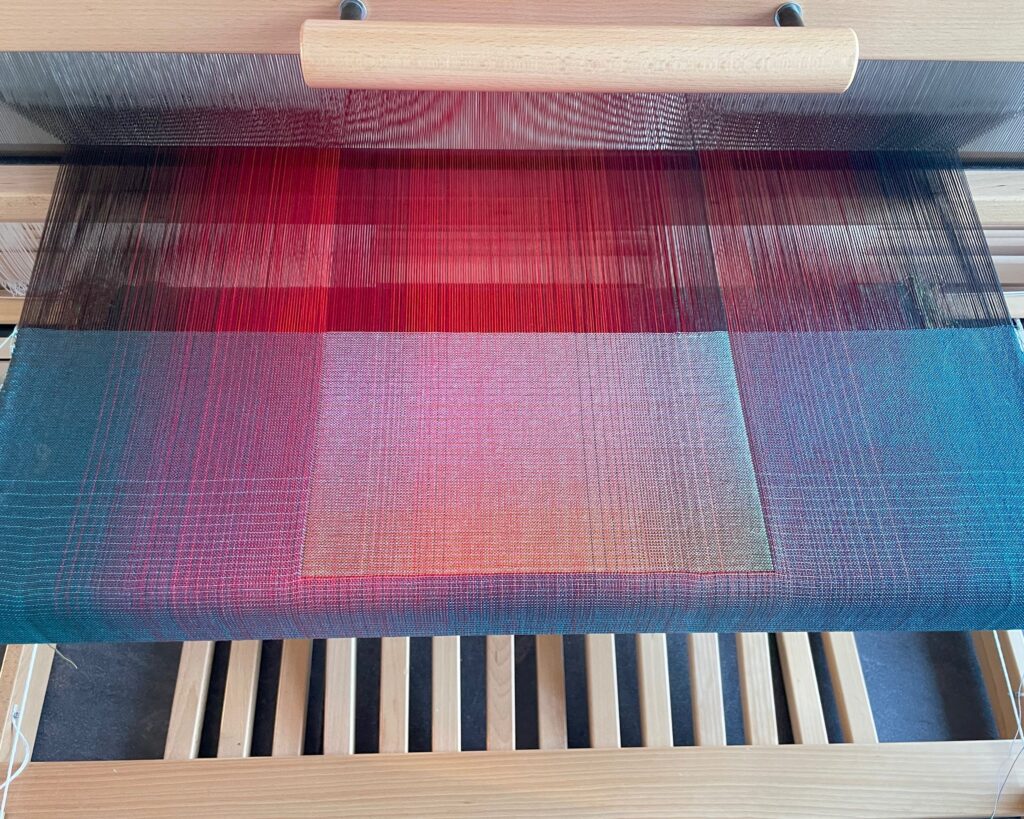
Work in progress in Christiane Maurer’s studio, The Hague, Netherlands
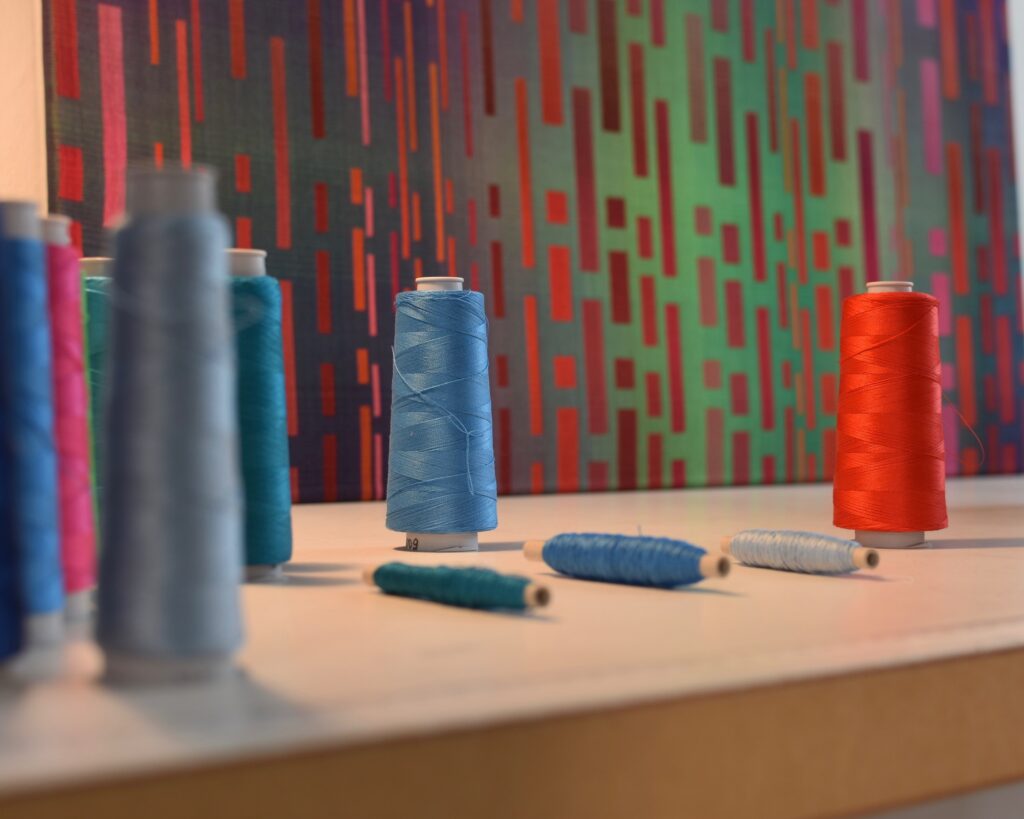
Cotton yarns in Christiane Maurer’s studio, The Hague, Netherlands
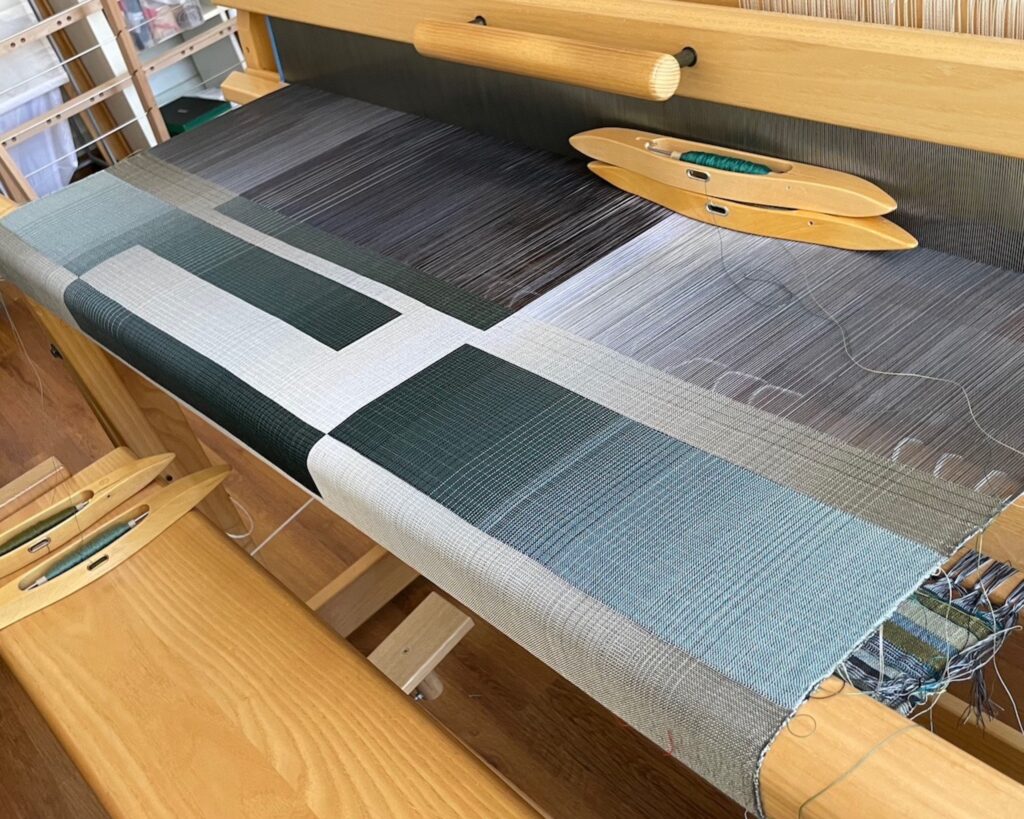
Work in progress in Christiane Maurer’s studio, The Hague, Netherlands
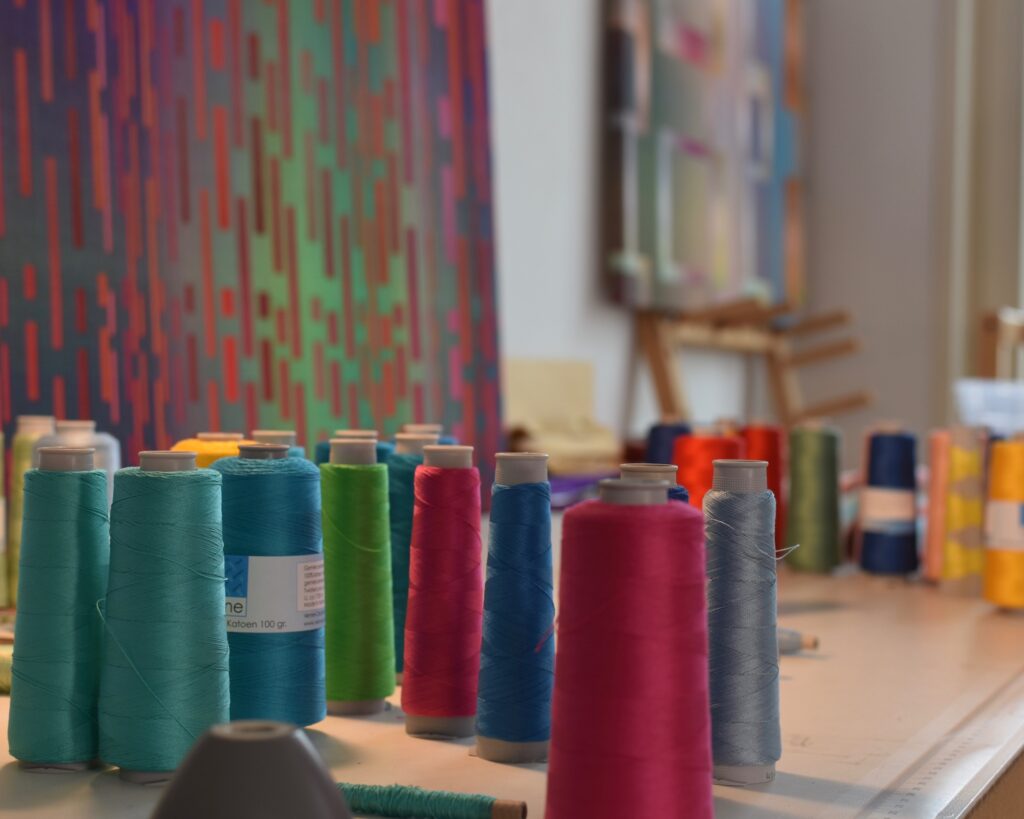
Cotton yarns in Christiane Maurer’s studio, The Hague, Netherlands
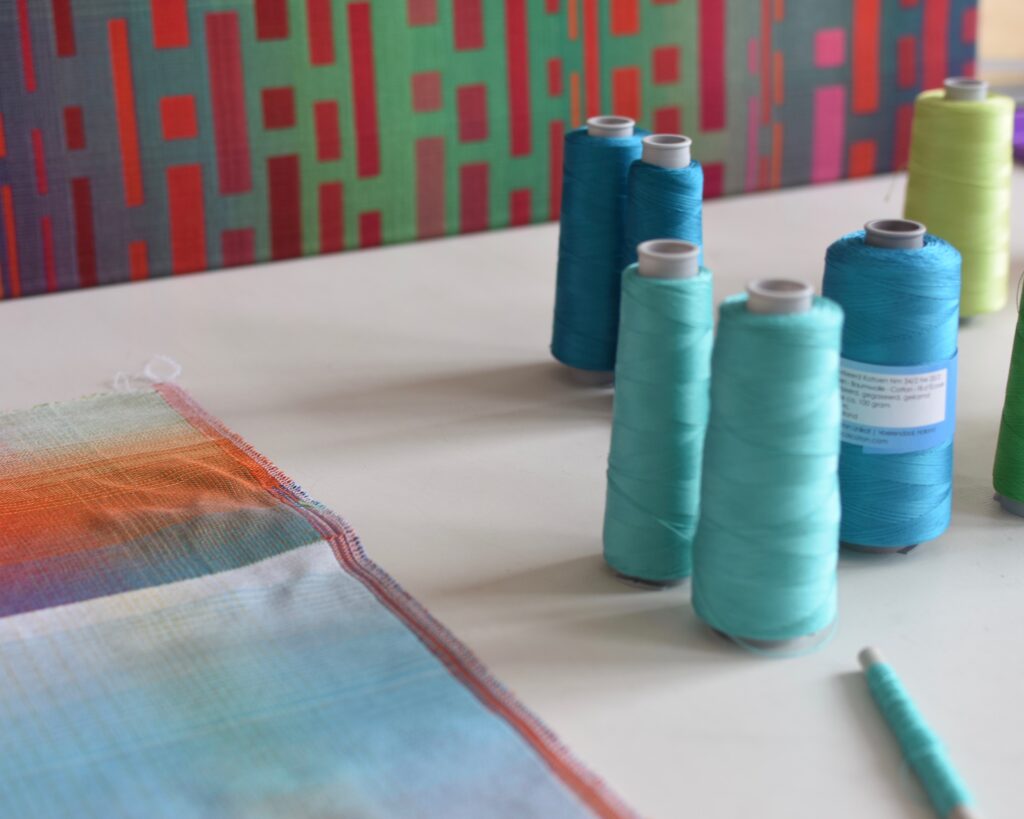
Cotton yarns in Christiane Maurer’s studio, The Hague, Netherlands
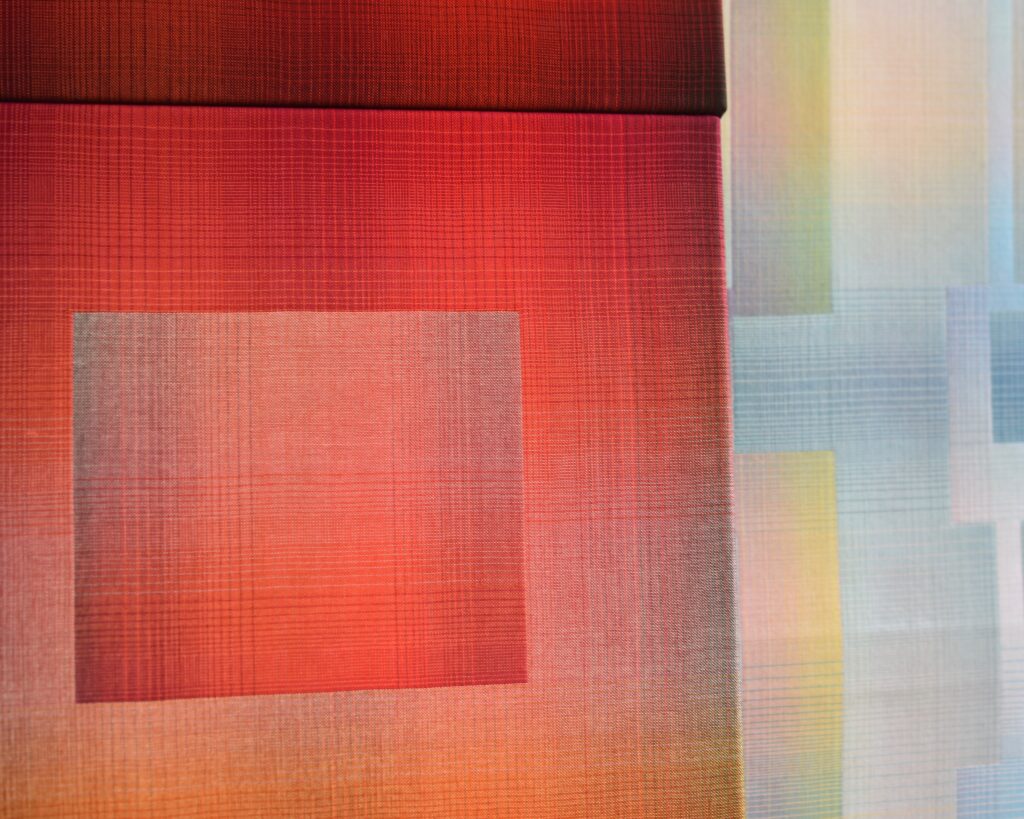
Christiane Maurer’s studio, The Hague, Netherlands
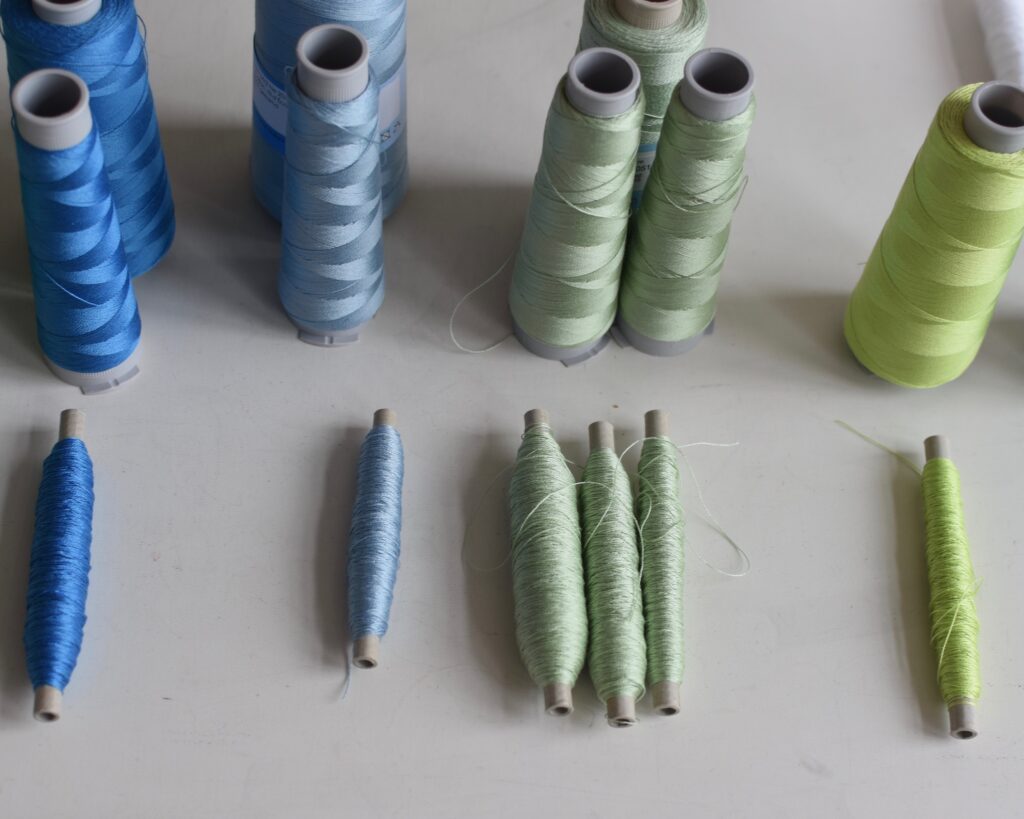
Cotton yarns in Christiane Maurer’s studio, The Hague, Netherlands
CV
Education
Christiane Maurer is a member of the Dutch artist associations Pulchri Studio (The Hague) and Kadmium (Delft).
1995 – 2015: Part time researcher and university teacher at TU Delft, The Hague University and Saxion University (Netherlands)
1989 – 1994: PhD research, Delft University of Technology, Faculty of Industrial Design, visual perception and affordances, Delft (Netherlands)
1988 – 1989: Research project in collaboration with the Bauhaus Archive in Berlin on the history of textile design in Germany in the 1920s and 1930s, Berlin (Germany)
1983 – 1988: Industrial Design, University of Arts Berlin, Completion as Diplom-Designer cum laude, Berlin (Germany)
1981 – 1983: Industrial Design, Munich University of Applied Sciences, Munich (Germany)
Solo exhibitions
2023: Galerie 44, The Hague (Netherlands)
Group exhibitions
2024: “Hoezo geen vrouwen in de kunst?”, Museum De Kantfabriek, Horst (Netherlands)
2024: “Lentesalon”, Kadmium, Delft (Netherlands)
2024: “Voorjaarssalon”, Pulchri Studio, The Hague (Netherlands)
2024: “MonTextilSchau”, A textile walk through Monschau, Monschau (Germany)
2024: “A Different Approach”, Six artists interpret textiles, Kadmium, Delft (Netherlands)
2024: “Najaarssalon & Van Ommeren – De Voogt Prijs”, Pulchri Studio, The Hague (Netherlands)
2023: “Voorjaarssalon”, Pulchri Studio, The Hague (Netherlands)
2023: “Lentesalon”, Kadmium, Delft (Netherlands)
2023: “New Members of Pulchri Studio”, The Hague (Netherlands)
2023: “Najaarssalon & Van Ommeren – De Voogt Prijs”, Pulchri Studio, The Hague (Netherlands)
2023: “Herfssalon”, Kadmium, Delft (Netherlands)
2023: “Open Atelierroute”, Delft (Netherlands)
2022: “7 x Weven”, De Katoendrukkerij, Amersfoort (Netherlands)
2022: 14th International Biennial of Contemporary Textile and Fibre Art ‘Scythia’, Online Exhibition and Conference, Ivano-Frankivsk (Ukraine)
2022: “Uit de schaduw”, Kunstroute Open Stal, Oldeberkoop (Netherlands)
2022: “Herfssalon”, Kadmium, Delft (Netherlands)
2022: “27e Atelierroute”, Delft (Netherlands)
2022: International Textile Art Biennial, Haacht (Belgium)
2020: 13th International Biennial of Fibre Art ‘Scythia’, Ivano-Frankivsk (Ukraine)
2020: “Pushing the Limits”, A Virtual Shaft Weaving Art Exhibition
2019: 9th International Mini Textile Art Exhibition ‘Scythia’, Ivano-Frankivsk (Ukraine)
Publications
Co-author of the book “Design in Deutschland 1933-45”, commissioned by the Werkbund-Archiv, Berlin (Germany)